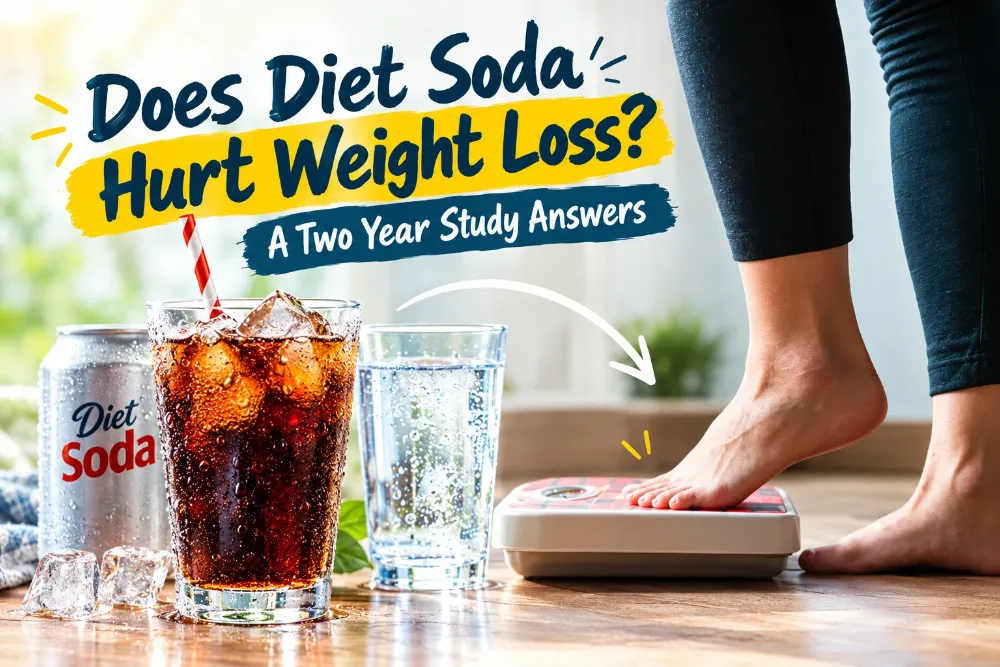
If you are trying to lose weight and you would rather not give up diet soda, this study will interest you. In a two year trial, people who drank diet beverages lost as much weight as people who drank water, and both groups kept it off.
The diet drink group lost 4.8 kilograms (about 10.6 pounds) on average, compared with 3.7 kilograms (about 8.2 pounds) for the water group. Researchers found no statistically significant difference between them.
That does not make diet soda a health drink, and the details matter. Here is what the researchers did, what they found, and where the limits are.
How the SWITCH Trial Was Run
Who took part
Researchers at the University of Liverpool ran the trial and published it in the British Journal of Nutrition. It included 493 adults with higher weight. Each person was randomly assigned to one of two groups. One group drank water. The other drank commercially available diet beverages sweetened with nonnutritive sweeteners, which are low or no calorie alternatives to sugar. The sweeteners included aspartame, acesulfame potassium and sucralose.
Everyone was asked to drink at least two servings of their assigned beverage every day.
SWITCH Trial?
The SWITCH trial was a European clinical study that ran from 2014 to 2023. It tested whether early surgery helps people with severe brain bleeds. The surgery, called decompressive craniectomy, removes a piece of the skull to relieve pressure, without removing the blood clot itself.
Researchers compared surgery plus the best medical treatment against the best medical treatment alone. Surgery significantly reduced deaths, but it also left more survivors with severe disabilities who depend on others for daily care.
Three stages across 104 weeks
The study ran for two years and had three phases:
- A 12 week weight loss program with weekly group meetings.
- A 40 week maintenance phase with monthly support.
- A 52 week period of monitoring, without the same ongoing assistance.
That last year is what makes the trial useful. Plenty of studies show people can lose weight with support. Fewer ask what happens once the support fades.
What the Numbers Showed
Weight and body measurements
Of the original 493 participants, 220 completed the full two years. Among them, the water group had lost an average of 3.7 kilograms by the end, and the diet drink group 4.8 kilograms. The researchers did not treat that gap as meaningful.
Both groups also kept their weight loss through the full period. Waist and hip measurements, body composition and several health markers improved in both.
Sugar intake
Sugar intake fell in both groups, with a slightly larger drop among those drinking diet beverages. This fits the practical case for diet drinks. For someone who relies on sugary drinks, a diet version may be easier to stick with than plain water.
Why This Challenges a Common Worry
Many people have heard that artificial sweeteners might increase appetite or encourage weight gain over time. Have you ever wondered whether your diet soda was quietly working against you?
This trial gives a reassuring answer on that point, at least for adults in a structured weight program. Professor Joanne Harrold said the findings do not support concerns that sweeteners disrupt appetite or cause weight gain. Professor Jason Halford said the study offers long term clinical evidence that has been missing from international discussions, and that these drinks “perform equivalently to water over two years.”
What the Study Cannot Tell You
A few limits are worth keeping in mind:
- It took place at a single location in England.
- Fewer than half of the participants completed the full two years.
- The drinks were studied alongside a structured weight management program, not on their own.
- It does not show that diet drinks are better than water.
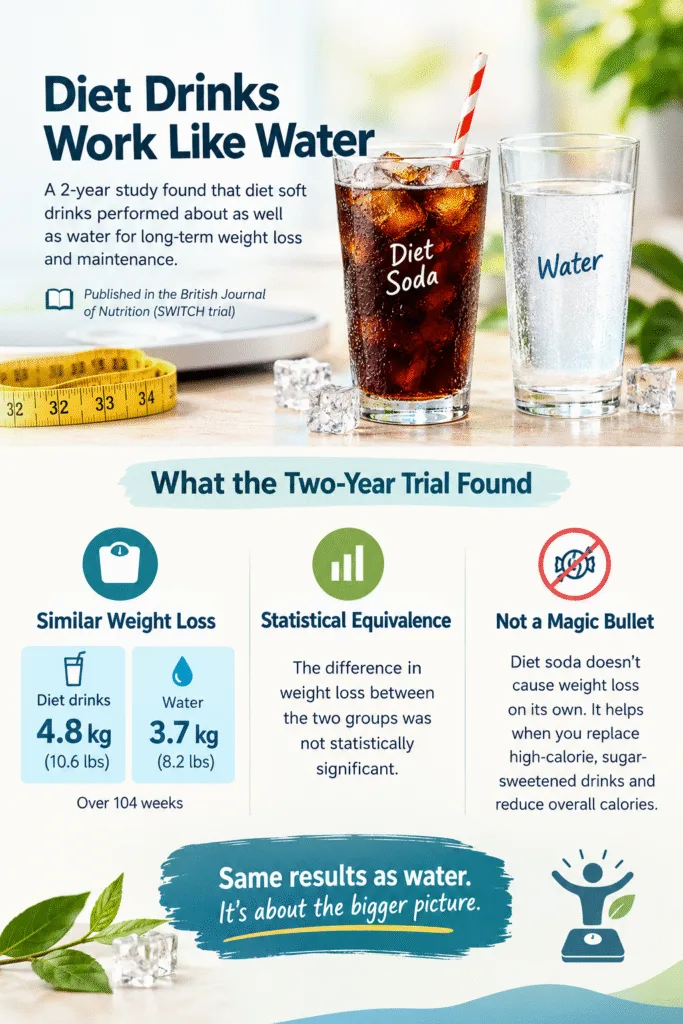
A two-year clinical trial, known as the SWITCH trial, published in the British Journal of Nutrition by researchers at the University of Liverpool, examined the effects of diet beverages compared with water in 493 adults with higher weight.
So the finding is narrow. For adults in a weight management program, choosing diet beverages instead of water did not lead to significantly different results over two years. It says nothing about everyone, in every situation.
You can read the full paper in the British Journal of Nutrition.
Diet Soda Still Has Its Own Trade Offs
Weight is only one part of health, and the study is not a clean bill of health for diet soda. Using Diet Coke as the example, here are the concerns often raised:
- No nutritional value. It has no calories, fat or sugar, but it also gives you no vitamins or minerals. The sugar and calorie savings only help if it replaces a full sugar drink.
- Aspartame. The World Health Organization has classified aspartame as a “possible carcinogen” (Group 2B). Agencies such as the FDA still consider moderate intake to be within safety limits.
- Metabolic risk. Observational studies have linked frequent diet soda consumption to higher rates of type 2 diabetes and metabolic syndrome. Researchers note that these links are complex and may reflect overall diet patterns.
- Teeth. Acids such as citric and phosphoric acid can wear down tooth enamel over time.
- Caffeine and digestion. A can contains about 46 mg of caffeine, which can cause jitteriness or sleep problems in sensitive people. Carbonation can cause bloating or acid reflux.
For a fuller discussion of the downsides, the Cleveland Clinic has a useful guide.
So Which Should You Choose?
If water is what you enjoy, nothing here suggests you should switch. If you are cutting back on sugary drinks and diet soda is what makes that realistic, this trial suggests it will not hold back your weight loss. What would you actually keep drinking six months from now? Probably the one you will really stick with.
Frequently Asked Questions
Does diet soda help you lose weight?
In this trial, diet drinks supported weight loss as well as water did. Participants drinking diet beverages lost 4.8 kilograms on average, compared with 3.7 kilograms in the water group, and the difference was not statistically significant. The drinks were used alongside a structured weight management program.
Can artificial sweeteners increase appetite?
That is a common concern, but this trial did not support it. Professor Joanne Harrold said the findings do not back the idea that sweeteners disrupt appetite or cause weight gain.
Is diet soda healthier than regular soda?
It has no sugar or calories, so it can reduce your daily intake if it replaces a full sugar drink. Sugar intake fell in both groups in the study, slightly more among those on diet beverages. That does not make diet soda a healthy choice in itself.
Did people keep the weight off after the program ended?
Yes. Both groups maintained their weight loss through the final 52 weeks, which had no regular support from the weight management program.
Is aspartame safe?
The World Health Organization classified aspartame as a “possible carcinogen” (Group 2B). Agencies such as the FDA consider moderate intake to be within safety limits.
Does diet soda damage your teeth?
The acids in diet colas, including citric and phosphoric acid, can erode tooth enamel over time.
How many people finished the study?
Of the 493 adults who started, 220 completed the full two years. That is one of the study’s limitations.