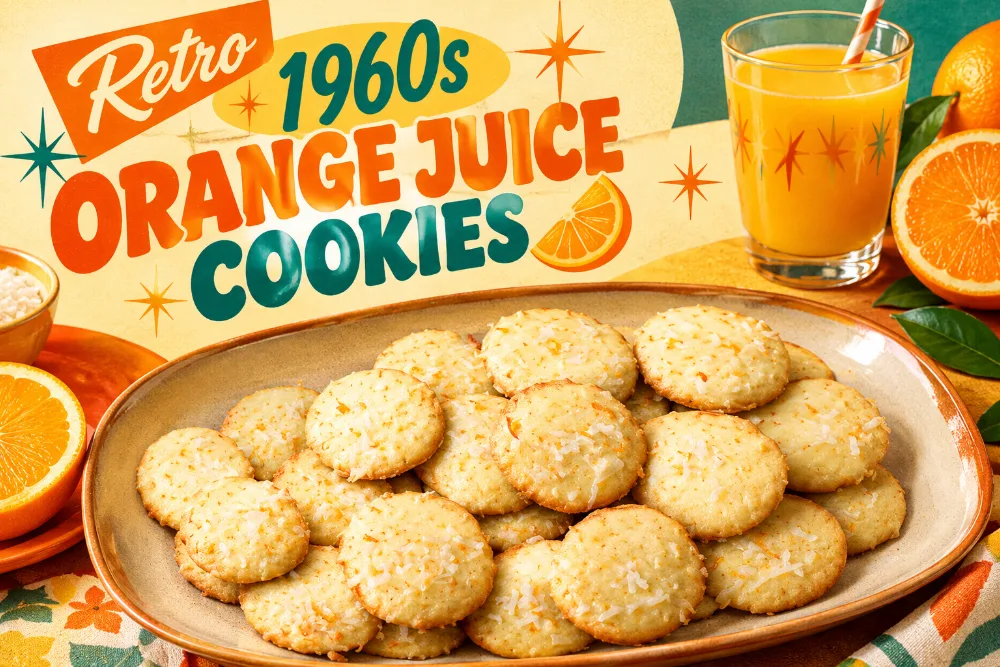
Retro 1960s orange juice cookies are soft, cake like drop cookies with a bright citrus punch. The dough is made with orange juice and fresh zest, and the finished cookies are usually topped with a sweet orange glaze or a sprinkle of shredded coconut.
You mix butter, sugar, eggs, flour and juice into a soft dough, drop it by the teaspoon onto a baking sheet, and bake at 350°F (175°C) for 8 to 10 minutes. The complete recipe is further down this page.
What makes them so appealing is how little they ask of you. Most of the ingredients are probably already in your kitchen, and the taste lands somewhere between a plain sugar cookie and a slice of orange cake.
Have you ever looked at a tray of chocolate and molasses cookies and wished for something lighter and brighter? This is that cookie.
Why a decades old recipe is making a comeback
The name says it all. The key ingredient is orange juice, and either fresh or canned will do the job. Shredded coconut is sometimes added to balance the citrus with a little tropical sweetness, and everything else is pantry basics: flour, sugar, butter and eggs. Southern Living described the recipe’s charm as its simplicity, and it is hard to argue.
The method works much like a drop biscuit. You spoon teaspoons of soft dough onto a baking sheet, add a little coconut on top if you like, and bake for around eight minutes. That makes it equally at home as an after school snack or a holiday gift.
It does have one honest drawback. These cookies will not win a beauty contest on a Christmas cookie plate. What they lack in looks they make up for in flavor, and that zippy, fresh taste is a welcome change next to the jelly filled, sugar dusted and cocoa heavy cookies that usually fill the tray. Once you have served them to friends and family, they tend to become a yearly request.
What you need for the dough and the glaze
The list is short, and nothing here needs a special trip to the shop.
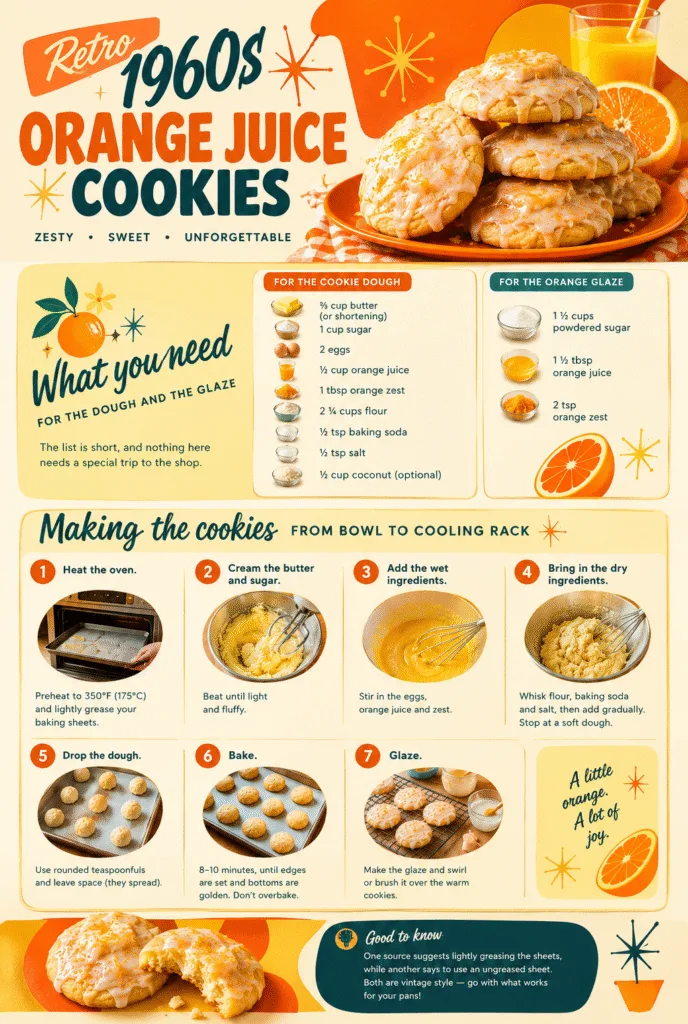
For the cookie dough
- ⅔ cup unsalted butter (or vegetable shortening), at room temperature
- 1 cup granulated sugar
- 2 large eggs
- ½ cup orange juice, fresh or canned
- 1 tablespoon freshly grated orange zest
- 2 ¼ cups all purpose flour
- ½ teaspoon baking soda
- ½ teaspoon salt
- Optional: ½ cup sweetened shredded coconut, folded into the dough or sprinkled on top
For the orange glaze
- 1 ½ cups sifted powdered sugar
- 1 ½ tablespoons fresh orange juice
- 2 teaspoons freshly grated orange zest
Making the cookies, from bowl to cooling rack
- Heat the oven. Preheat to 350°F (175°C) and lightly grease your baking sheets.
- Cream the butter and sugar. Beat the softened butter and granulated sugar in a large bowl until the mixture turns light and fluffy.
- Add the wet ingredients. Stir in the eggs, orange juice and zest until everything is well combined.
- Bring in the dry ingredients. Whisk the flour, baking soda and salt together, then add them gradually to the wet mixture. Stop as soon as a soft drop cookie dough forms.
- Drop the dough. Place rounded teaspoonfuls on the prepared sheets and leave a little space, because the cookies spread.
- Bake. Give them 8 to 10 minutes, until the edges are set and the bottoms are lightly golden. Do not overbake.
- Glaze. While the cookies cool on a wire rack, make the glaze (see below) and swirl or brush it over the tops of the warm cookies.
One small difference between the sources is worth knowing about. This method says to grease the sheets lightly, while another description of the same cookie mentions dropping the dough onto an ungreased sheet. Either approach appears in vintage style recipes, so go with whichever suits the pans you own.
The orange glaze, and the coconut option
The glaze takes about a minute. Whisk 1 ½ cups of sifted powdered sugar with 1 ½ tablespoons of fresh orange juice and 2 teaspoons of grated zest until it turns smooth. The zest matters here, because it gives the icing a real orange flavor rather than just sweetness.
If you would rather skip the icing, shredded coconut on top is the other classic finish. It adds an extra layer of sweetness and a bit of texture. You can also fold ½ cup of sweetened coconut into the dough itself. Which would you pick, the glossy glaze or the coconut?
When these cookies taste best: Christmas trays and summer picnics
The peak season is the winter holidays, though they make a good transition treat for summer picnics too.
Why winter is their natural home
In vintage baking traditions, orange juice cookies are a Christmas and winter holiday staple. Their zippy citrus flavor offers a contrast to the heavy, molasses filled, jelly stuffed and cocoa laden sweets that crowd a holiday tray. Winter is also the peak harvest season for fresh citrus, so oranges in late year baking feel natural. Some mid century variations, such as no bake orange juice holiday balls, were even stored in containers for a few days so the flavor could deepen before gifting.
Also try:
Why they also work on a warm afternoon
Because many versions are cake like drop cookies or iced shortbreads, they hold up well in warmer months, and the creamsicle style flavor suits a hot day. According to period cookbooks such as vintage Bon Appétit guides, iced orange drop cookies can be frozen ahead and then packed into a picnic basket without melting right away.
Also try:
Questions bakers ask before they start
Does it matter if I use canned orange juice?
No. The recipe works with fresh or canned juice. The fresh zest is what keeps the citrus flavor bright, so do not skip it.
Can I leave out the coconut?
Yes. The coconut is optional. It is there to balance the citrus with tropical sweetness, and the cookies still work well with only the orange glaze.
Can I use shortening instead of butter?
The recipe allows either unsalted butter or vegetable shortening, as long as it is at room temperature before you cream it with the sugar.
How do I know when the cookies are done?
Look at the edges and the bottoms. The edges should be set and the bottoms lightly golden, which usually takes 8 to 10 minutes. Pull them out rather than risk overbaking.
Why do these cookies look plainer than other holiday favorites?
They are soft, cake like drop cookies, not decorated or filled ones. Their strength is flavor rather than looks, which is exactly why they stand out beside heavier, more colorful treats.
Can I bake them ahead for a picnic or for gifts?
Period cookbooks describe freezing iced orange drop cookies in advance for picnics. For holiday gifting, some mid century variations were aged in containers for a few days to deepen the flavor, though that tip applies to the no bake holiday balls rather than the drop cookies here.