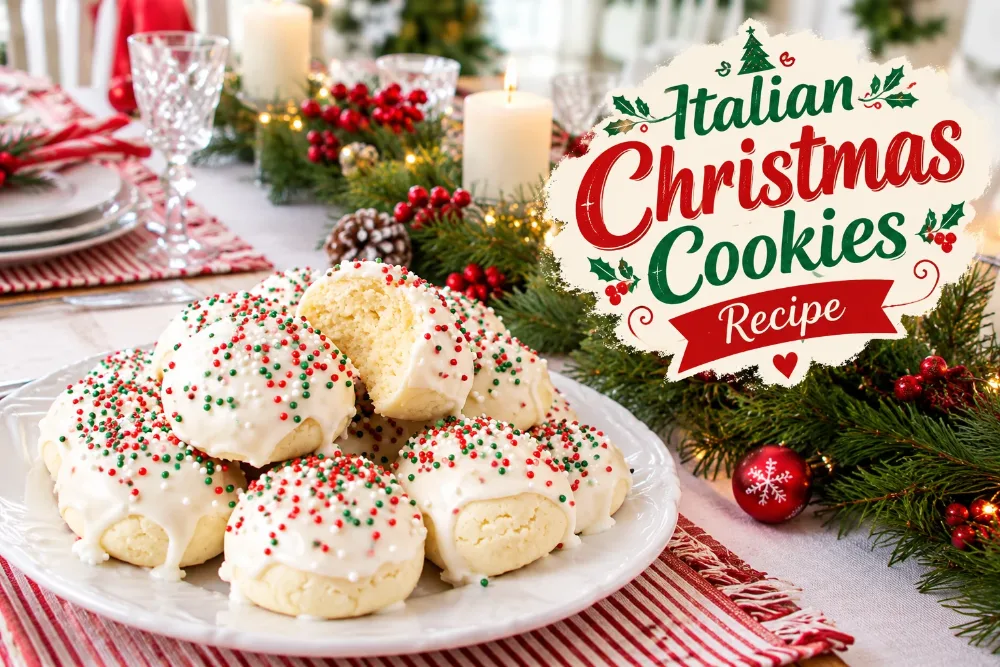
Classic Italian Christmas cookies, often called anginetti, are tender and cakey, flavoured with anise, almond or lemon, then dipped in a sweet glaze and covered in colourful sprinkles.
You can bake a batch at home in about an hour of active time plus chilling, or you can travel to places like Rome, Sicily, Naples and Siena, where each region has its own festive biscuit.
Below you will find a recipe from team recipe to cook you can follow tonight, a little history on why we bake cookies at Christmas at all, and a guide to tasting them where they began.
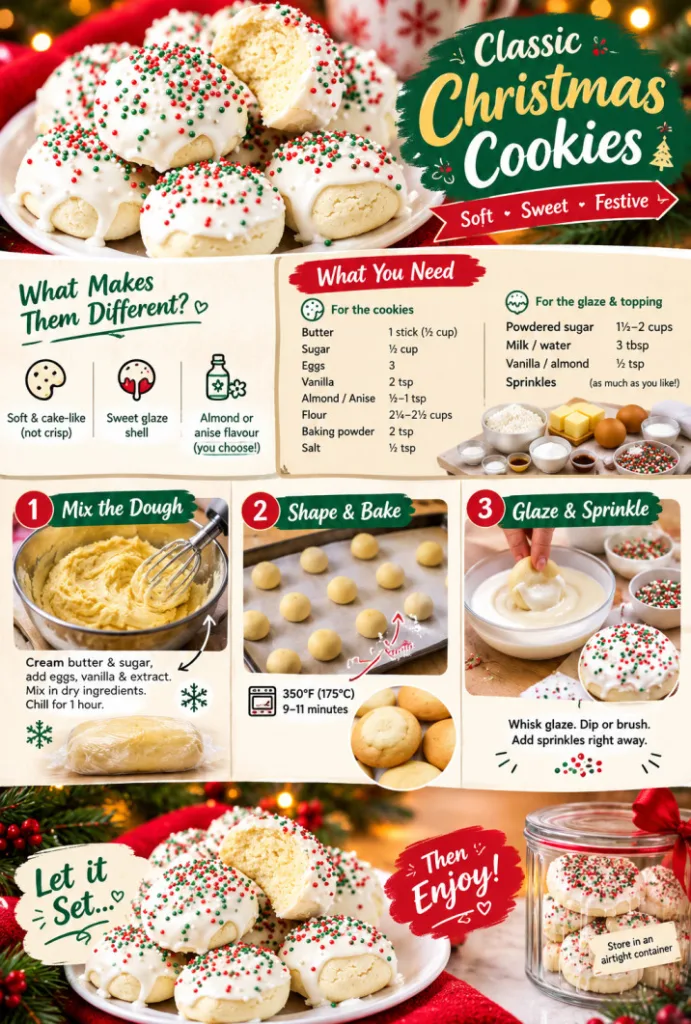
What Makes These Cookies Different
Most people picture a crisp, buttery biscuit when they hear “Christmas cookie.” These are softer. The dough is closer to a small cake than a shortbread, and the glaze adds a thin, sweet shell that sets while the inside stays pale and tender.
The flavouring is where tradition shows up. Some families use almond extract, others use anise, and the recipe below leaves that choice to you. Neither is wrong. It comes down to what your family grew up eating.
Baking Them at Home
What You Need
For the cookies:
- 1 stick (½ cup) unsalted butter, softened
- ½ cup granulated sugar
- 3 large eggs
- 2 teaspoons vanilla extract
- ½ to 1 teaspoon almond extract, or anise extract if that is your tradition
- 2¼ to 2½ cups all purpose flour
- 2 teaspoons baking powder
- ½ teaspoon salt
For the glaze and topping:
- 1⅓ to 2 cups powdered sugar
- 3 tablespoons milk or water
- ½ teaspoon vanilla or almond extract
- Festive nonpareils or coloured sprinkles
Making the Dough
Cream the softened butter and granulated sugar in a large bowl, or in a stand mixer, until the mixture looks light and fluffy. Beat in the eggs one at a time, then add the vanilla and your almond or anise extract.
In a separate bowl, whisk together the flour, baking powder and salt. Add the dry mixture to the wet one gradually until you have a soft, slightly sticky dough. Stop mixing as soon as it comes together. Overworking it is the quickest way to lose that tender texture.
Wrap the dough in plastic and refrigerate it for at least an hour. Chilling makes a sticky dough far easier to handle.
Shaping and Baking
Preheat your oven to 350°F (175°C) and line a baking sheet with parchment paper. Roll the dough into 1 inch balls, or twist portions into small knots or rounds if you want the traditional look. Space them about 2 inches apart.
Bake for 9 to 11 minutes. You are looking for pale, soft tops with only a hint of gold on the bottom, so resist the urge to leave them in longer. Let them cool completely on a wire rack before you do anything else.
Glazing Without a Mess
Whisk the powdered sugar, milk and extract until smooth. Dip the top of each cooled cookie into the glaze, or brush it on, and add sprinkles straight away. The glaze sets quickly, and sprinkles will not stick once it does.
Leave the cookies at room temperature until the glaze hardens fully, then store them in an airtight container.
Why We Bake Cookies at Christmas
Christmas cookies go back to medieval Europe, where they began as luxury treats. Cinnamon, nutmeg, ginger and cardamom were extremely expensive then, and monasteries kept those spices for special winter baking.
The early versions were also quite different from what we eat now. They were hard, dense and low in moisture, which meant families could keep them for weeks or even months through the cold season without refrigeration. Their toughness was a practical feature.
Dutch and German settlers carried the tradition to America in the 1600s and 1700s. German immigrants in Pennsylvania made a workable sugar cookie dough popular, and that dough became the blueprint for the cut out cookies many households still bake. By the 19th century, cheaper sugar and refined flour had put holiday baking within reach of ordinary families.
Reference: story behind Christmas cookies
The Queen and the Gingerbread
One of the better known stories involves Queen Elizabeth I, who is widely credited with inspiring the first gingerbread men. She reportedly asked her royal bakers to shape gingerbread into the likenesses of dignitaries visiting her court.
How Milk and Cookies for Santa Began
Leaving cookies and milk for Santa became popular during the Great Depression in the 1930s. Parents encouraged it as a way to teach children gratitude and sharing during a period of real hardship.
The habit of leaving something out is global, though the menu shifts by region. Children in the United Kingdom leave mince pies, children in Sweden leave creamy rice pudding, and children in Australia leave a cold drink, since December there means blazing summer heat. Which of these would you rather find on your own doorstep?
Animal Crackers have a festive past too. They were designed in the late 19th century as edible Christmas tree ornaments, and the string handle on the box was there so you could hang it from a branch.
Reference: History of a Popular Christmas Tradition
Where to Try Authentic Italian Christmas Cookies
Baking at home is satisfying, but tasting these cookies in the place that made them is another experience. Here is where to look.
Rome
Biscottificio Artigiano Innocenti on Via della Luce 21 is a beloved, historic neighbourhood bakery known for traditional handmade Italian cookies and its old world charm. Two Sizes, at Via del Governo Vecchio 88, offers seasonal and traditional Italian treats. If you are planning a longer visit, the Rome Tourism Portal is a useful starting point for local food walks.
Sicily
Pastry shops across Palermo and Catania specialise in cuccidati, also spelt buccellati. These are Christmas cookies filled with fig, date, walnut and spice, then topped with icing and sprinkles.
Naples
Neapolitan pasticcerie bake roccocò during the winter holidays, hard cookies shaped like rings and made with honey and almonds. You will also find mostaccioli, which are spiced and covered in chocolate.
Siena, Tuscany
Artisan sweet shops in Siena sell cavallucci, chewy cookies packed with spice and nuts that have been made since the Renaissance.
Little Italy Neighbourhoods Abroad
You do not have to fly to Italy. Historic Italian American bakeries in cities such as New York, Boston and Chicago, along with regional Italian specialty shops, put together classic Christmas cookie platters. Expect ricotta cookies, anise pizzelles, pignoli cookies made with pine nuts, and rainbow cookie bars.
Also try:
Questions People Ask About Italian Christmas Cookies
Should I use almond extract or anise extract?
Either works. The recipe allows half a teaspoon to a full teaspoon of almond extract, or anise extract if that is what your tradition calls for. Anise gives a more distinctly Italian, liquorice leaning flavour, while almond is softer.
How do I know when the cookies are done?
Look at the colour rather than the clock. The tops should stay pale and soft, with just a hint of golden colour underneath. That usually takes 9 to 11 minutes at 350°F (175°C).
Why does the dough need to chill?
The dough is soft and slightly sticky, so an hour in the fridge firms it up enough to roll into balls or twist into knots without it clinging to your hands.
Can I glaze the cookies while they are still warm?
It is better to wait. Cool them completely on a wire rack first, then dip and add sprinkles immediately, before the glaze begins to set.
Why were the earliest Christmas cookies so hard?
They were made dense and low in moisture on purpose so that they would keep through cold winters without refrigeration.
Which Italian regions are known for their own Christmas cookies?
Sicily is known for cuccidati, Naples for roccocò and mostaccioli, and Siena for cavallucci. In Italian American communities, ricotta cookies, pizzelles, pignoli cookies and rainbow cookie bars are common on holiday platters.
You may also like:
Everyone Looks to Europe for Christmas Wines, Kerala Never Needed To