
Ask most people where Christmas wine comes from, and Europe is the first answer that comes to mind. Few would suspect that in Kerala, a small Indian state, Christian families have been preparing their own version for generations, long before the dish ever required a name.
There is no imported bottle involved and no fancy label either. Just grapes, sugar, a handful of warm spices, and about six weeks of patience, turned into something families have trusted every December for as long as anyone can remember.
Locally known as Munthiri wine, this homemade grape wine is prepared predominantly during the Christmas season in Kerala’s Christian households. Unlike the stronger, drier commercial wines found on store shelves, this home brew is made from dark red grapes or raisins, and it turns out naturally sweet, closer in character to a port wine or a dessert wine than anything you’d pick up at a liquor store.
Why This Recipe Works So Well for Beginners
A lot of people avoid making wine at home because they assume it requires special tools or scientific precision. This recipe proves otherwise. The fermentation happens naturally, driven by the wild yeast already present on the grape skins. Your job is mostly to layer the ingredients correctly and then leave them alone.
Homemade Christmas Wine Recipe
Here is the full recipe for grape wine made from red grapes, perfect for this Christmas season.
Ingredients
- 1 kg of red or purple grapes
- 1 kg sugar
- 1/2 cup of wheat kernels
- 5 to 6 cloves
- 3 small sticks of cinnamon
- 3 small pieces of mace
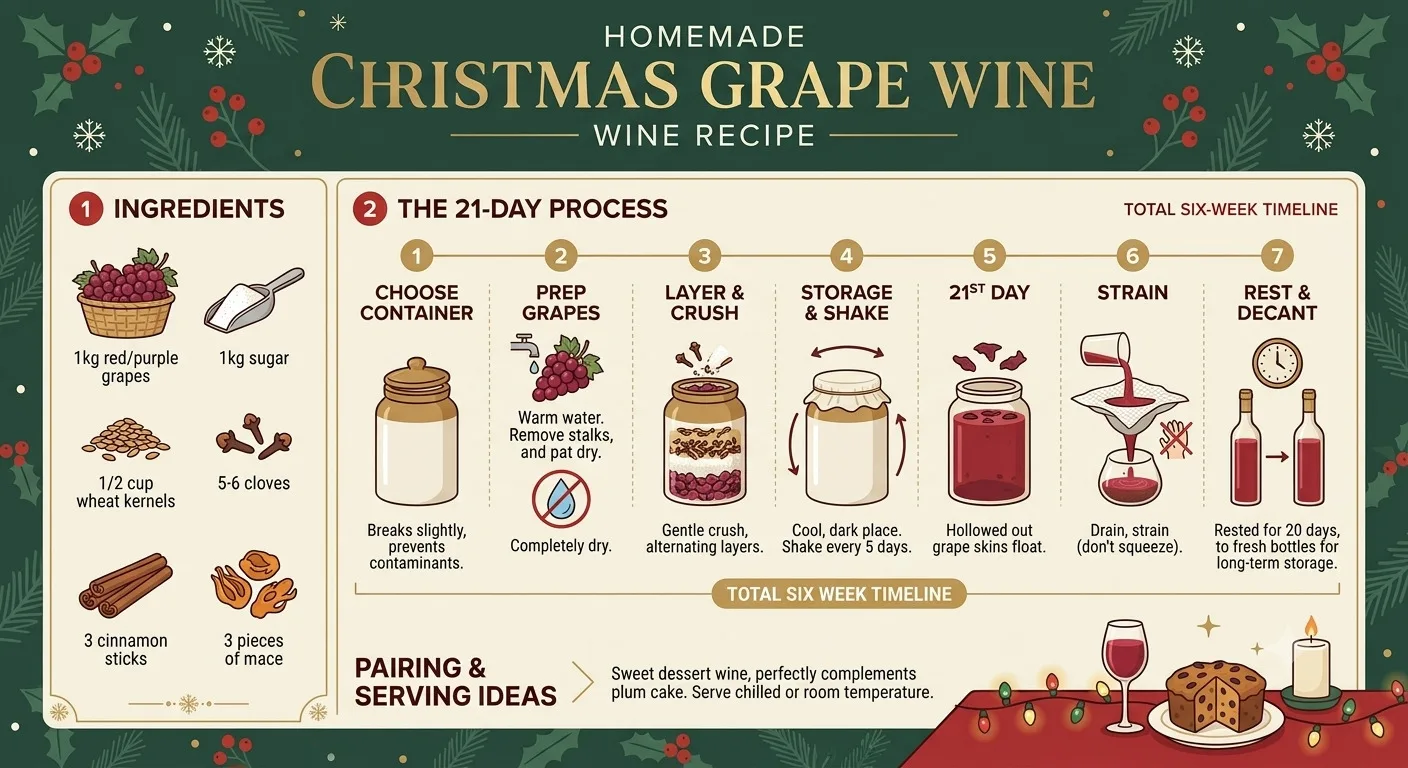
The 21 -day process
- Use a ceramic jar, preferably a traditional bharani what those people call, or a transparent glass jar with an airtight lid. The container matters more than people expect, since it needs to breathe slightly without letting in contaminants.
- Wash the grapes thoroughly with warm water, remove the stalks, and pat them completely dry. Any leftover moisture from washing can throw off the balance later.
- Crush the grapes gently with your hands just enough to open the tips. Place them into the cleaned jar along with the spices, layering them with sugar alternately. Keep repeating this layering process until the jar is about two thirds full.
- Cover the jar with a muslin cloth and close the lid loosely rather than sealing it tight. Store it in a cool, dark place, away from direct sunlight. Every fifth day, gently shake the closed jar to redistribute the contents without opening it.
- On the twenty first day, open the lid. You will notice the grape skins have floated to the top, mostly hollowed out from the fermentation process.
- Carefully drain the liquid without disturbing the sediment too much, then strain it through a cheesecloth without squeezing the pulp, since squeezing tends to introduce bitterness.
- Pour the strained liquid into clean, dry bottles and let it rest undisturbed for another 20 days. After that resting period, decant it once more into fresh, clean, dry bottles for long term storage.
The total wait is around six weeks from start to finish, but most of that time asks nothing of you beyond an occasional gentle shake. Many families start their batch right after the first week of November so it is perfectly ready by Christmas Eve.
Pairing and Serving Ideas
Since this wine leans sweet rather than dry, it works beautifully as a dessert wine. A small glass alongside plum cake or makes for a comforting end to a holiday meal. It is typically served chilled or at room temperature rather than warmed.
The Best Christmas Wine Glasses to Serve It In
Good wine deserves a glass that does it justice, and gifting a beautiful set is one of the easiest ways to make someone’s holiday feel special. If you are already thinking about Christmas shopping for the 2026 season, this is worth considering.

Made of heavier glass with a smooth rim, this set of two glasses features a handcrafted Christmas tree design inside each piece. The detailing and coloring feel genuinely well made rather than mass produced. Each glass measures about 2.38 inches in diameter at the mouth, with a body diameter of 3.66 inches and a height of 4.72 inches.
Checkout Qinyoung 2 Pcs Christmas Tree Stemless Wine Glasses with 3D Tree Inside
The design is versatile enough to use for wine, mixed drinks, soda, or even milk and juice, which makes it a practical gift rather than something that sits unused in a cabinet.
As of this review, the set is available in four holiday themed selections, including ghost, bat, funny ghost, and Christmas tree designs, so there is some room to match the aesthetic to the person you’re gifting it to.
A Christmas Wine Advent Calendar Worth Knowing About
If homemade wine isn’t quite your thing, or you simply want to explore a wider range of flavors this season, the WSJ Wine 2026 Home for the Holidays Advent Calendar is currently open for pre order and worth a look.
Here’s what it includes:
The calendar contains 24 different mini bottles of wine, with no repeats across the set, spanning red, white, rosé, and Prosecco styles. The selections are pulled from well regarded wine regions including France, Italy, Spain, California, Argentina, New Zealand, Germany, Austria, South Africa, and Portugal, giving you a genuine tour of global wine styles one day at a time.
A $25 deposit secures your order, with the remaining balance of $134.99 due when the calendar ships in late October. Pre order by Monday, August 31 for free delivery and a $25 eGift Card, though note it expires January 31, 2027.
Final Thoughts
Whether you’re making a batch of traditional Munthiri wine from scratch or picking out glasses that turn a simple pour into a moment worth remembering, this season offers plenty of ways to slow down and enjoy something made with care. The homemade route in particular is worth trying at least once, not just for the wine itself, but for the ritual of making it.
Related search:
Frequently Asked Questions
Why do Kerala Christian families make wine specifically for Christmas?
Winemaking became tied to Christmas in Kerala because grapes and raisins were among the few ingredients available that could ferment into something celebratory without needing imported spirits. Over generations, it turned into a household ritual rather than just a recipe, something families pass down instead of buy.
What does Munthiri wine taste like compared to store bought wine?
It tastes noticeably sweeter and softer than most commercial wines. Since it’s fermented slowly with sugar and whole grapes rather than processed with added alcohol, the flavor sits closer to a dessert wine, mild, fruity, and easy to sip without the sharpness of a dry red.
Can this recipe be made in smaller or larger batches?
Yes, the ratio of one kilogram of grapes to one kilogram of sugar can be scaled up or down as needed. Just make sure the jar size matches the quantity, since the mixture needs room to expand slightly during fermentation.
What happens if I open the jar before day 21?
Opening it too early disrupts the fermentation process and lets in unwanted air and bacteria before the wine has had time to develop properly. It’s best to only open the jar every fifth day for the shake, and wait until day 21 to check the contents fully.
Why are cloves, cinnamon, and mace added to a wine recipe?
These spices aren’t just for flavor, they add warmth and depth that balance out the sweetness from the sugar and grapes. It’s what gives this wine its distinct, cozy character that feels specifically suited to the Christmas season rather than an everyday drink.
Are the wine glasses mentioned in this article only for wine?
No, despite the wine themed design, the glasses are versatile enough for mixed drinks, soda, juice, or even milk, making them practical beyond just serving homemade wine during the holidays.
Is the WSJ Wine Advent Calendar a good option for someone new to wine?
It can be, since it includes 24 different mini bottles spanning several styles and regions, giving newcomers a low commitment way to sample reds, whites, rosé, and Prosecco without buying full bottles of each.
Do I need to refrigerate homemade Christmas wine after bottling?
It’s generally kept in a cool, dark place rather than refrigerated during the fermentation and resting stages. Once bottled and finished, refrigeration can help preserve freshness for longer, especially once opened.