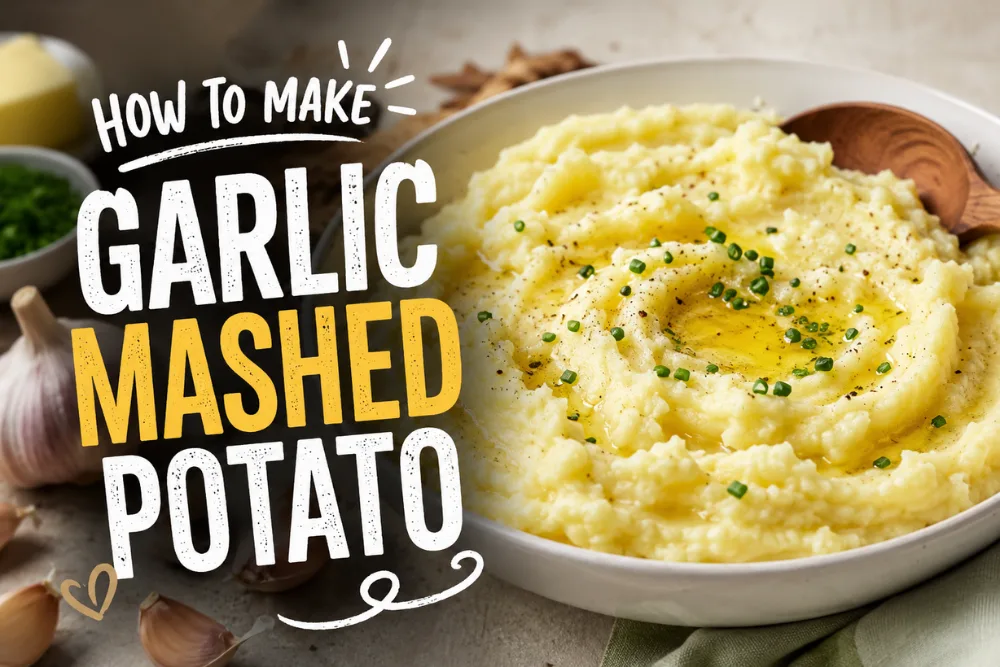
Garlic mashed potatoes are one of the easiest and most satisfying side dishes you can make. By combining fluffy potatoes with fresh garlic, butter, milk, and sour cream, you can create rich, creamy mashed potatoes that pair perfectly with everything from roasted chicken to grilled steak. With a few simple techniques, you will enjoy smooth, flavorful results every time.
How to Make Garlic Mashed Potatoes
Making garlic mashed potatoes is surprisingly simple when you follow each step carefully.
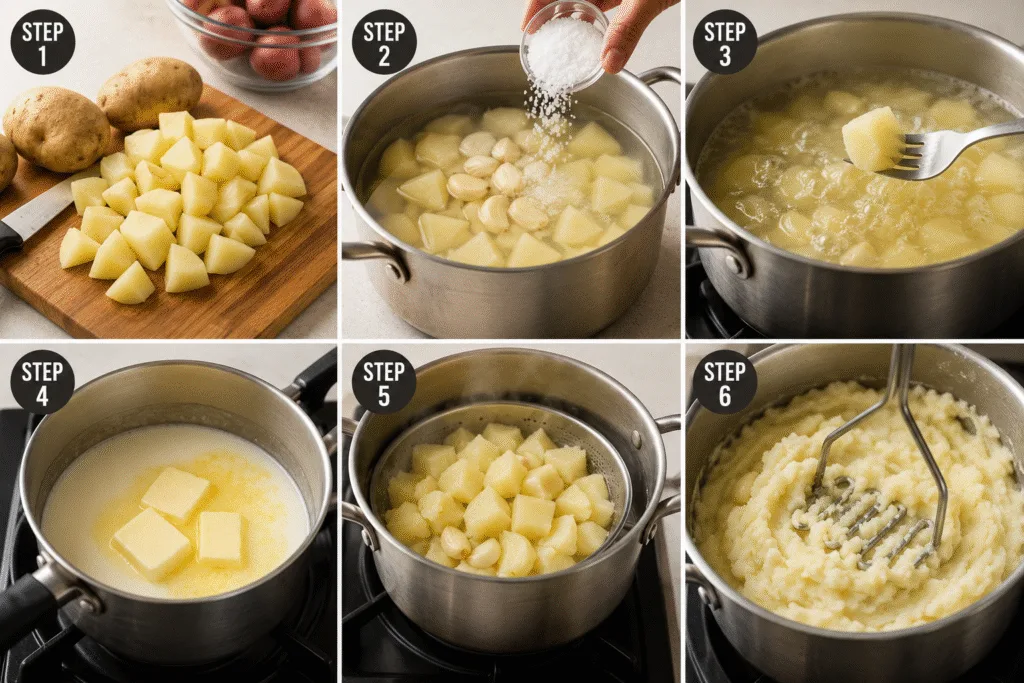
Step One
Wash the potatoes thoroughly under running water.
If you prefer perfectly smooth mashed potatoes, peel the potatoes first.
If you enjoy more texture, especially when using red potatoes, you may leave the skins on.
Cut every potato into similar sized pieces using personalized cutting boards for a touch of uniqueness.
Uniform pieces cook at the same speed, preventing some potatoes from becoming too soft while others remain firm.
Step Two
Place the potatoes into a large cooking pot.
Add the peeled garlic cloves.
Cover everything with cold water.
Starting with cold water allows the potatoes to cook evenly from the inside out.
If potatoes are placed directly into boiling water, the outside often cooks much faster than the center.
Add a generous amount of salt to the water before cooking.
Step Three
Bring the water to a gentle boil over medium high heat.
Once boiling, reduce the heat slightly and continue cooking until the potatoes become tender.
The potatoes should easily break apart when pierced with a fork, but they should still hold their shape.
Overcooked potatoes absorb excess water, which can make mashed potatoes watery.
Step Four
While the potatoes cook, place the butter and milk into a small saucepan.
Warm them gently until the butter melts completely.
Avoid boiling the milk.
Warm dairy combines much more easily with hot potatoes and helps maintain a smooth consistency.
Step Five
Drain the cooked potatoes thoroughly.
Allow them to sit in the warm pot for one or two minutes.
This brief resting time allows excess moisture to evaporate, resulting in fluffier mashed potatoes.
Step Six
Mash the potatoes and garlic together using a potato masher.
Continue mashing only until the potatoes become mostly smooth.
Some small pieces create wonderful texture.
Avoid excessive mashing because too much mixing releases starch, creating sticky mashed potatoes.
Step Seven
Slowly pour the warm butter and milk mixture into the potatoes while stirring gently.
Once combined, fold in the sour cream.
Taste the mashed potatoes.
Add more salt and freshly ground black pepper if needed.
Serve immediately while warm.
Why You Will Love This Garlic Mashed Potatoes Recipe
There is something comforting about a bowl of warm mashed potatoes. When you add garlic, butter, and creamy dairy ingredients, the flavor becomes even more delicious. Whether you are preparing a holiday dinner, a family gathering, or a simple weeknight meal, this recipe always delivers satisfying results.
Unlike store bought mashed potatoes, homemade garlic mashed potatoes let you control every ingredient. You can adjust the garlic, butter, and seasoning to match your family’s taste while enjoying fresh ingredients and a rich homemade flavor.
This is a beginner friendly and a easy recipe to cook. Even if you have never made mashed potatoes before, you can follow these simple steps and create creamy potatoes without any difficulty.
Here are just a few reasons why this recipe stands out.
- Rich and creamy texture
- Full garlic flavor without being overwhelming
- Made using simple pantry ingredients
- Easy enough for beginners
- Perfect for everyday meals and special occasions
- Ready in less than an hour
- Easy to prepare ahead of time
- Stores and reheats beautifully
Ingredients You Will Need
One of the best things about garlic mashed potatoes is that they require only a handful of simple ingredients. Each one plays an important role in creating the perfect balance of flavor and texture.
Potatoes
The potatoes are the foundation of this recipe. Choosing the right variety makes a noticeable difference in the final dish.
Yukon Gold potatoes are one of the best choices because they naturally have a buttery flavor and creamy texture. They mash easily without becoming sticky and produce smooth, fluffy mashed potatoes.
If Yukon Gold potatoes are not available, Russet potatoes are another excellent option. They contain more starch, creating lighter and fluffier mashed potatoes. Just avoid over mixing them because excess mixing releases starch and creates a sticky texture.
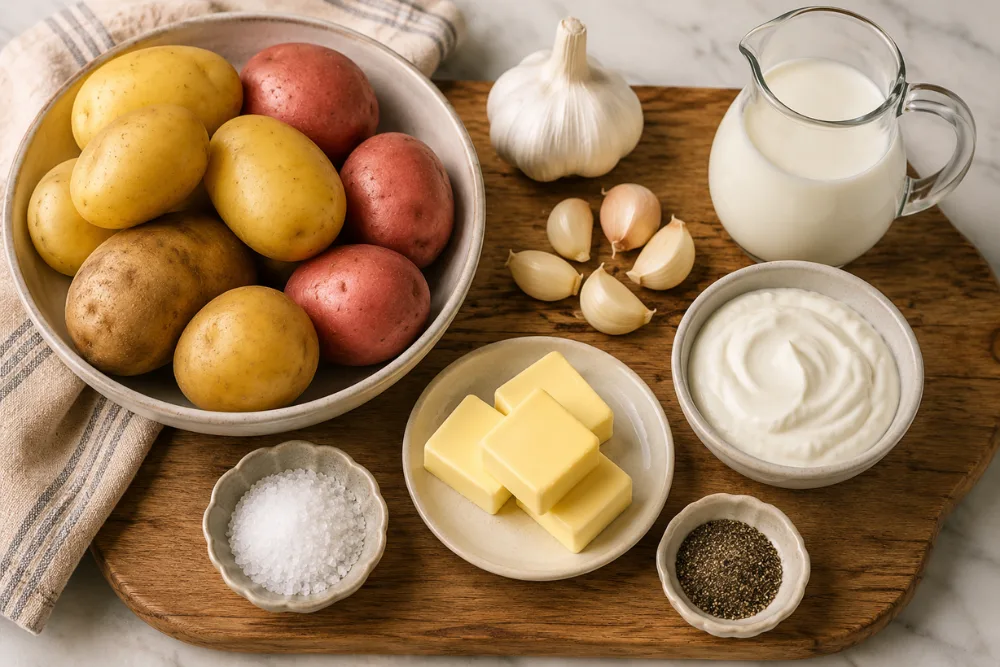 Red potatoes can also be used if you prefer a more rustic mashed potato with small pieces of potato skin throughout the dish. Their thin skin becomes tender during cooking and adds extra texture.
Fresh Garlic
Fresh garlic provides the signature flavor in this recipe.
Boiling the garlic together with the potatoes softens its sharpness while creating a mellow, buttery garlic flavor. As the potatoes are mashed, the cooked garlic blends naturally into the mixture, giving every bite rich garlic flavor.
If you enjoy stronger garlic flavor, simply add one or two extra cloves.
Butter
Butter adds richness and helps create the smooth texture everyone expects from homemade mashed potatoes.
Unsalted butter works best because it allows you to control the salt level more accurately. Once the potatoes are finished, you can always adjust the seasoning according to your preference.
Milk
Whole milk creates a silky consistency while keeping the mashed potatoes light and fluffy.
Warm milk blends much better than cold milk because it maintains the temperature of the potatoes and helps everything combine smoothly.
If you prefer an even richer result, you may substitute cream for part of the milk.
Sour Cream
Sour cream is the ingredient that makes these mashed potatoes especially creamy.
It adds a slight tang that balances the richness of the butter while giving the potatoes a velvety finish.
Even people who normally do not enjoy sour cream often love the subtle flavor it brings to mashed potatoes.
Salt
Never underestimate the importance of salt.
Potatoes naturally absorb a large amount of seasoning while cooking. Salting both the cooking water and the finished mashed potatoes ensures every bite has balanced flavor.
Black Pepper
Freshly ground black pepper adds gentle warmth and completes the seasoning without overpowering the garlic.
Choosing the Best Potatoes
Many people believe every potato works equally well for mashed potatoes. In reality, selecting the right potato makes a significant difference.
Yukon Gold Potatoes
Yukon Gold potatoes are often considered the best option because they contain the perfect balance of starch and moisture.
They create mashed potatoes that are creamy, buttery, and naturally smooth.
These potatoes also hold their structure well, making them less likely to become sticky while mashing.
Russet Potatoes
Russet potatoes contain more starch and produce lighter mashed potatoes.
Their fluffy texture makes them a favorite for many home cooks.
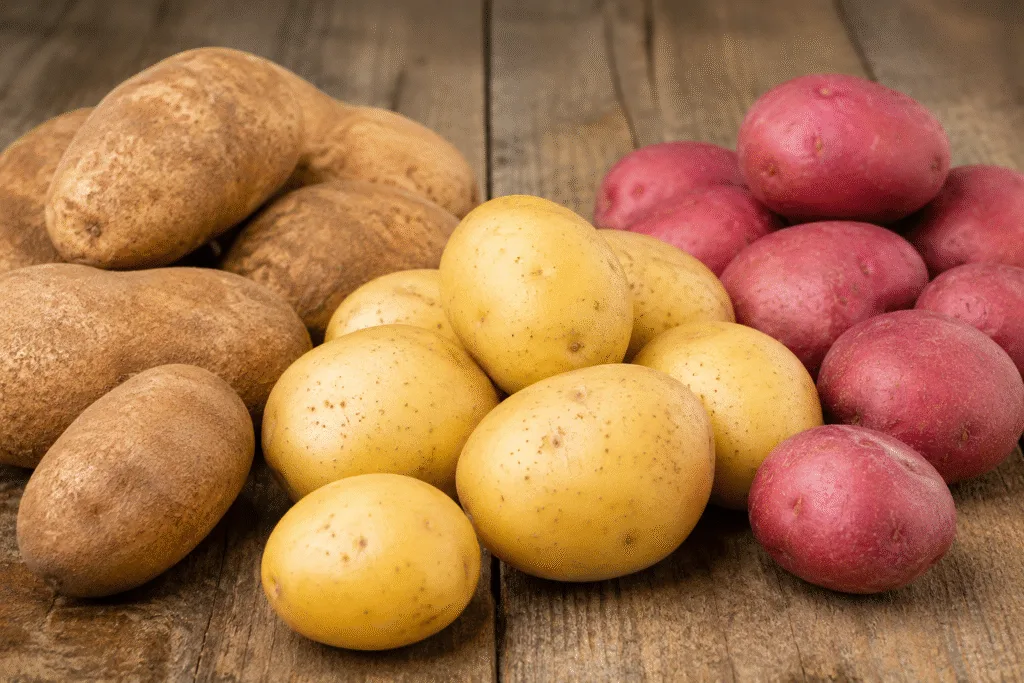 However, because they contain more starch, they should be mashed gently to avoid developing a gummy texture.
Red Potatoes
Red potatoes offer a different experience.
Their thin skin becomes soft during cooking, making peeling optional.
They produce mashed potatoes with a slightly rustic appearance and excellent flavor.
If you enjoy a homemade country style dish, red potatoes are an excellent choice.
Why Starting With Cold Water Matters
Many people overlook this simple step.
Starting potatoes in cold water allows the heat to increase gradually throughout the potato.
This creates evenly cooked potatoes with consistent texture from the outside to the center.
Adding potatoes directly into boiling water often results in uneven cooking.
The outside becomes soft before the inside finishes cooking.
This can lead to mashed potatoes with small hard pieces mixed throughout the bowl.
Beginning with cold water takes only a few extra minutes but greatly improves the final texture.
How Garlic Changes the Flavor
Garlic completely transforms ordinary mashed potatoes into something special.
Fresh garlic becomes sweeter and milder after boiling.
Instead of producing sharp garlic flavor, cooked garlic develops a smooth, buttery taste that blends naturally into the potatoes.
For people who enjoy stronger garlic flavor, roasted garlic creates an even richer experience.
Roasting allows the garlic to caramelize, producing sweet, deep flavors that complement butter and potatoes beautifully.
Both options work well, depending on your personal preference.
Expert Tips for Perfect Garlic Mashed Potatoes
Making mashed potatoes is simple, but a few small details can take them from good to outstanding. These tips will help you achieve soft, creamy potatoes every time.
Choose Potatoes of Similar Size
After peeling the potatoes, cut them into pieces that are close to the same size. This helps every piece cook evenly. If some pieces are much larger than others, the smaller ones may become overcooked while the larger ones remain firm in the center.
Even cooking creates a smoother texture and makes mashing much easier.
Salt the Cooking Water
Seasoning the cooking water is one of the easiest ways to improve flavor.
As the potatoes cook, they absorb some of the salted water. This means the seasoning reaches the inside of the potatoes instead of only coating the outside after mashing.
Do not worry if the water tastes salty. Most of it will be drained away before you mash the potatoes.
Warm the Dairy Ingredients
Always warm the butter and milk before adding them to the potatoes.
Cold ingredients reduce the temperature of the potatoes and can make the butter harder to mix evenly.
Warm dairy blends quickly, giving you a silky and smooth texture without extra mixing.
Mash While the Potatoes Are Hot
Hot potatoes mash much more easily than cooled potatoes.
As potatoes cool, their starch begins to firm up, making them harder to mash smoothly.
For the best texture, begin mashing as soon as the potatoes have been drained.
Do Not Over Mix
This is one of the most important tips in the entire recipe.
Potatoes contain starch. Every time you mash or stir them, more starch is released.
Too much mixing creates potatoes that become sticky instead of fluffy.
Mash only until everything is combined and smooth.
Taste Before Serving
Even if you followed the recipe exactly, always taste the mashed potatoes before serving.
Some potatoes naturally need a little more salt than others.
A small pinch of extra salt or a little more pepper can make a noticeable difference.
Common Mistakes to Avoid
Even experienced home cooks occasionally make mistakes when preparing mashed potatoes.
Fortunately, most of these problems are easy to prevent.
Using the Wrong Potato Variety
Some potatoes naturally contain more moisture and less starch.
These varieties often produce mashed potatoes with a heavier texture.
Yukon Gold, Russet, and red potatoes all work well, depending on the texture you prefer.
Overcooking the Potatoes
Potatoes should become fork tender without falling apart completely.
If they cook too long, they absorb extra water.
Extra moisture makes mashed potatoes softer than expected and can reduce their rich flavor.
Skipping the Drain Time
After draining, leave the potatoes in the warm pot for about one minute.
This allows excess moisture to evaporate naturally.
It is a simple step that creates lighter mashed potatoes.
Adding Cold Ingredients
Cold butter or milk cools the potatoes immediately.
This makes blending more difficult and may leave small pieces of butter throughout the mixture.
Warm ingredients mix much more evenly.
Over Mixing
Many people continue mixing because they want perfectly smooth potatoes.
Ironically, the opposite happens.
Too much mixing creates glue like potatoes with an unpleasant texture.
Stop mixing as soon as everything looks creamy.
How to Fix Common Problems
Even if something goes wrong, your mashed potatoes can often be saved.
Mashed Potatoes Are Too Thick
If the potatoes seem too thick, slowly add warm milk a few tablespoons at a time.
Stir gently after each addition until you reach the desired consistency.
Mashed Potatoes Are Too Thin
If the potatoes become thinner than expected, allow them to sit for several minutes.
The potatoes naturally absorb some of the liquid.
If they still seem too loose, gently stir in a little more mashed potato or allow them to warm over very low heat while stirring occasionally.
Mashed Potatoes Taste Bland
Usually, the solution is simple.
Add another small pinch of salt.
A little butter and freshly ground black pepper can also enhance the flavor.
Garlic Flavor Is Too Mild
Mix in another small amount of roasted garlic or finely grated fresh garlic while the potatoes are still hot.
This creates a stronger garlic flavor without changing the texture.
Delicious Variations to Try
One of the best things about garlic mashed potatoes is how easy they are to customize.
Roasted Garlic Mashed Potatoes
Roasted garlic has a sweeter and deeper flavor than boiled garlic.
Simply roast a whole garlic bulb until soft.
Squeeze the roasted cloves into the potatoes while mashing.
The result is rich, buttery, and slightly sweet.
Cheesy Garlic Mashed Potatoes
If you enjoy cheese, stir some freshly grated cheddar or Parmesan into the warm potatoes.
The cheese melts beautifully and creates an even creamier texture.
Serve immediately while the cheese is fully melted.
Herb Garlic Mashed Potatoes
Fresh herbs brighten the flavor.
Chopped parsley, chives, rosemary, or thyme all pair wonderfully with garlic and potatoes.
Add the herbs just before serving to preserve their fresh taste.
Cream Cheese Version
Cream cheese creates an extra rich texture.
Allow it to soften before mixing it into the potatoes.
It blends smoothly and adds a mild tangy flavor.
Dairy Free Option
You can still enjoy creamy mashed potatoes without dairy.
Replace the butter with a plant based alternative.
Use unsweetened oat milk or almond milk instead of regular milk.
The potatoes remain creamy while becoming suitable for dairy free diets.
Extra Garlic Lovers Version
If you absolutely love garlic, combine boiled garlic with roasted garlic.
The mixture creates layers of flavor that garlic lovers will appreciate.
What to Serve With Garlic Mashed Potatoes
Garlic mashed potatoes pair well with many main dishes.
Their creamy texture balances savory meats, vegetables, and rich sauces.
Some delicious combinations include roasted chicken, grilled steak, baked salmon, meatloaf, roasted turkey, pork chops, slow cooked beef, or roasted vegetables.
They also work beautifully alongside mushroom sauce, creamy chicken dishes, or homemade gravy.
For lighter meals, serve them with green beans, roasted broccoli, asparagus, fresh salads, or steamed carrots.
you may also like: Roasted Asparagus and Carrots Dish That Fits Every Occasion
Adding a sprinkle of chopped parsley or chives just before serving gives the potatoes a fresh appearance and adds a little extra flavor.
Can You Make Garlic Mashed Potatoes Ahead of Time
Yes.
Garlic mashed potatoes are an excellent make ahead side dish.
Prepare the recipe exactly as directed.
Allow the potatoes to cool slightly before placing them into an airtight container.
Store them in the refrigerator until you are ready to serve.
When reheating, add a little warm milk and butter.
Stir gently until smooth and creamy again.
This simple step helps restore the texture after refrigeration.
Preparing mashed potatoes ahead of time makes holiday cooking much less stressful because one major side dish is already finished.
How to Store Leftovers
Leftover garlic mashed potatoes store very well.
Allow the potatoes to cool to room temperature before transferring them to a sealed container.
Place them in the refrigerator.
They remain fresh for about three days when stored properly.
Avoid leaving mashed potatoes at room temperature for extended periods because dairy products spoil quickly.
When storing multiple servings, divide them into smaller containers.
Smaller portions cool more quickly and are easier to reheat later.
Can You Freeze Garlic Mashed Potatoes
Garlic mashed potatoes freeze surprisingly well.
Place completely cooled potatoes into freezer safe containers or freezer bags.
Remove as much air as possible before sealing.
Label each container with the date.
The potatoes maintain good quality for up to three months.
When ready to enjoy them again, thaw them overnight in the refrigerator.
After thawing, add a little warm milk and butter while reheating.
This helps restore their creamy consistency.
Many families prepare large batches before holidays because freezing saves valuable cooking time.
How to Reheat Garlic Mashed Potatoes
Proper reheating helps preserve the creamy texture.
Microwave Method
Transfer the potatoes into a microwave safe bowl.
Add a splash of warm milk and a small amount of butter.
Heat in short intervals while stirring between each one.
Continue until heated evenly.
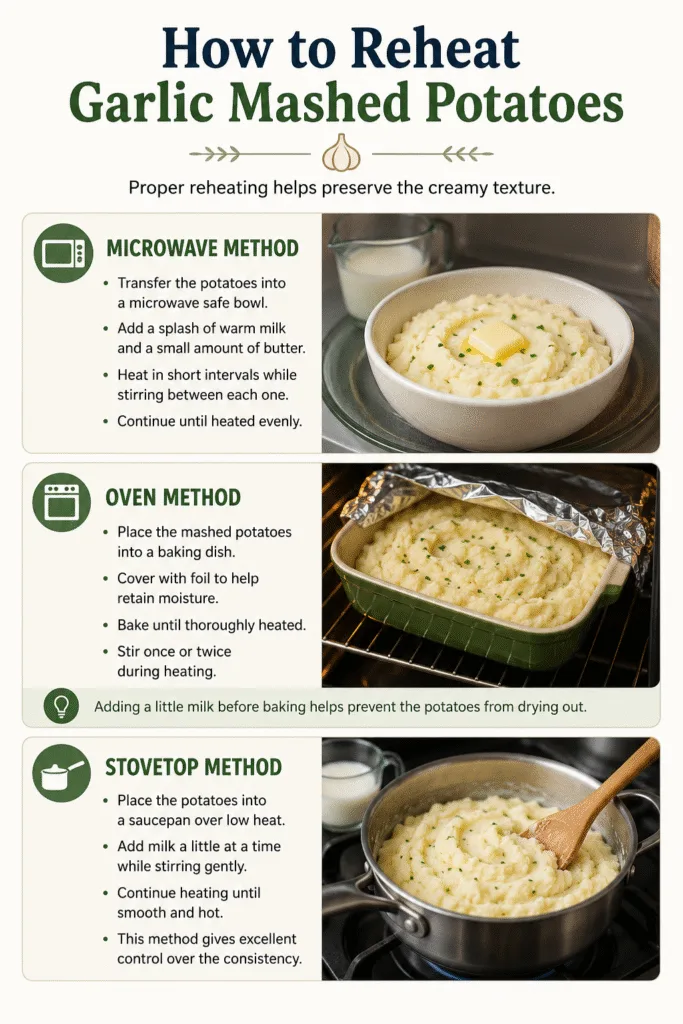
Oven Method
Place the mashed potatoes into a baking dish.
Cover with foil to help retain moisture.
Bake until thoroughly heated.
Stir once or twice during heating.
Adding a little milk before baking helps prevent the potatoes from drying out.
Stovetop Method
Place the potatoes into a saucepan over low heat.
Add milk a little at a time while stirring gently.
Continue heating until smooth and hot.
This method gives excellent control over the consistency.
Frequently Asked Questions
What Are the Best Potatoes for Garlic Mashed Potatoes?
Yukon Gold potatoes are often considered the best choice because they naturally have a creamy texture and buttery flavor. They mash easily and produce smooth potatoes without becoming sticky.
Russet potatoes are another excellent option if you prefer lighter and fluffier mashed potatoes. Since they contain more starch, they should be mashed gently to maintain the best texture.
Red potatoes are perfect if you enjoy a rustic style mashed potato with small pieces of tender skin mixed throughout.
Should I Peel the Potatoes?
That depends on the texture you prefer.
Peeling the potatoes creates a smooth and creamy bowl of mashed potatoes that many people enjoy for holiday dinners and special occasions.
Leaving the skins on creates a heartier texture with extra flavor. Thin skinned potatoes, such as red potatoes or Yukon Gold potatoes, work especially well without peeling.
No matter which option you choose, wash the potatoes thoroughly before cooking.
Why Are My Mashed Potatoes Sticky?
Sticky mashed potatoes usually happen because they have been mixed too much.
Every time potatoes are stirred or mashed, starch is released. Too much starch creates a thick and glue like texture instead of soft and fluffy potatoes.
Using an electric mixer can also create this problem because it works much faster than a traditional potato masher.
For the best results, mash only until the potatoes become smooth and creamy.
Can I Make Garlic Mashed Potatoes Ahead of Time?
Yes.
This recipe is perfect for preparing in advance.
Simply cook and mash the potatoes as directed. Allow them to cool before placing them into an airtight container in the refrigerator.
When you are ready to serve, gently reheat the potatoes with a little warm milk and butter.
They will become creamy again with very little effort.
This makes the recipe especially useful during busy holiday meals when saving time is important.
Can I Use Greek Yogurt Instead of Sour Cream?
Absolutely.
Plain Greek yogurt is an excellent substitute for sour cream.
It provides a creamy texture while adding a slight tang similar to sour cream.
Choose full fat Greek yogurt if possible because it creates the richest consistency.
How Much Garlic Should I Use?
Garlic is very much a personal preference.
If you enjoy a mild garlic flavor, four cloves are usually enough.
For a richer garlic taste, six or more cloves create a bold yet balanced flavor.
Roasted garlic is another wonderful option if you prefer sweeter and less sharp garlic notes.
Do not be afraid to adjust the amount according to your family’s taste.
Can I Use Cream Instead of Milk?
Yes.
Cream produces an even richer texture than milk.
Many people enjoy using a combination of milk and cream to achieve the perfect balance between lightness and richness.
Whichever dairy you choose, warm it before adding it to the potatoes.
Can I Freeze Leftover Garlic Mashed Potatoes?
Yes.
Garlic mashed potatoes freeze surprisingly well when stored properly.
Place cooled potatoes into freezer safe containers and remove as much air as possible before sealing.
Freeze for up to three months.
When reheating, stir in warm milk and butter to restore their creamy texture.
Can I Make This Recipe Without Dairy?
Yes.
There are several simple substitutions that still create delicious mashed potatoes.
Use a plant based butter alternative and replace regular milk with unsweetened oat milk or almond milk.
If you would like extra creaminess, dairy free sour cream can also be added.
These changes allow everyone at the table to enjoy this comforting side dish.
How Many Potatoes Should I Prepare Per Person?
A good guideline is about one half pound of potatoes for each adult.
For children or smaller portions, slightly less is usually enough.
If you are serving garlic mashed potatoes as part of a holiday meal with several side dishes, this amount generally works well.
If mashed potatoes are the main side dish, preparing a little extra ensures everyone can enjoy another serving.
Can I Add Cheese?
Certainly.
Cheddar, Parmesan, Monterey Jack, and Gruyere all melt beautifully into mashed potatoes.
Add the cheese while the potatoes are still hot so it melts completely and blends smoothly throughout the mixture.
Fresh herbs also pair nicely with cheesy mashed potatoes.
Which Tool Is Best for Mashing Potatoes?
A traditional potato masher is one of the easiest and most reliable tools.
It gives you excellent control over the texture while reducing the risk of over mixing.
A potato ricer is another fantastic choice if you prefer exceptionally smooth mashed potatoes.
Avoid using a blender or food processor because these appliances break down the starch too much, creating a sticky consistency.
Nutrition Information
The exact nutritional values depend on the ingredients and serving size you choose.
A typical serving of garlic mashed potatoes provides carbohydrates for energy along with moderate amounts of protein and healthy fats from butter, milk, and sour cream.
You may also like: This FTL1 Protein Foods Trend Is Growing Fast Here Is Why
Potatoes are naturally rich in potassium and also provide vitamin C, vitamin B six, and dietary fiber, especially when the skins are left on.
If you are looking for a lighter version, reducing the butter or replacing sour cream with plain Greek yogurt can lower the overall calorie content while maintaining a creamy texture.
Final Tips Before You Start
A few simple habits can make every batch even better.
Always choose fresh potatoes that feel firm and free from sprouts.
Use fresh garlic whenever possible for the best flavor.
Warm your butter and milk before combining them with the potatoes.
Mash gently and stop as soon as the potatoes become smooth.
Taste before serving and adjust the seasoning if needed.
Finally, serve the potatoes while they are hot because that is when their creamy texture and rich flavor are at their very best.
Final Thoughts
Garlic mashed potatoes are a classic comfort food that never goes out of style. With the right potatoes, fresh garlic, creamy butter, warm milk, and a few simple techniques, you can create a side dish that is smooth, rich, and full of flavor.
Whether you are preparing a quick family dinner or planning a festive holiday feast, this recipe is reliable, easy to follow, and always satisfying. Choosing quality ingredients, avoiding over mixing, and seasoning carefully are the secrets to achieving fluffy mashed potatoes every time.
Once you master this recipe, you can easily make it your own by adding herbs, cheese, roasted garlic, or your favorite seasonings. No matter how you customize it, homemade garlic mashed potatoes are sure to become a favorite at your table.
Enjoy them fresh from the pot, share them with family and friends, and do not be surprised if everyone asks for seconds. A simple bowl of creamy garlic mashed potatoes has a way of bringing comfort to every meal and creating memories that last long after dinner is over.