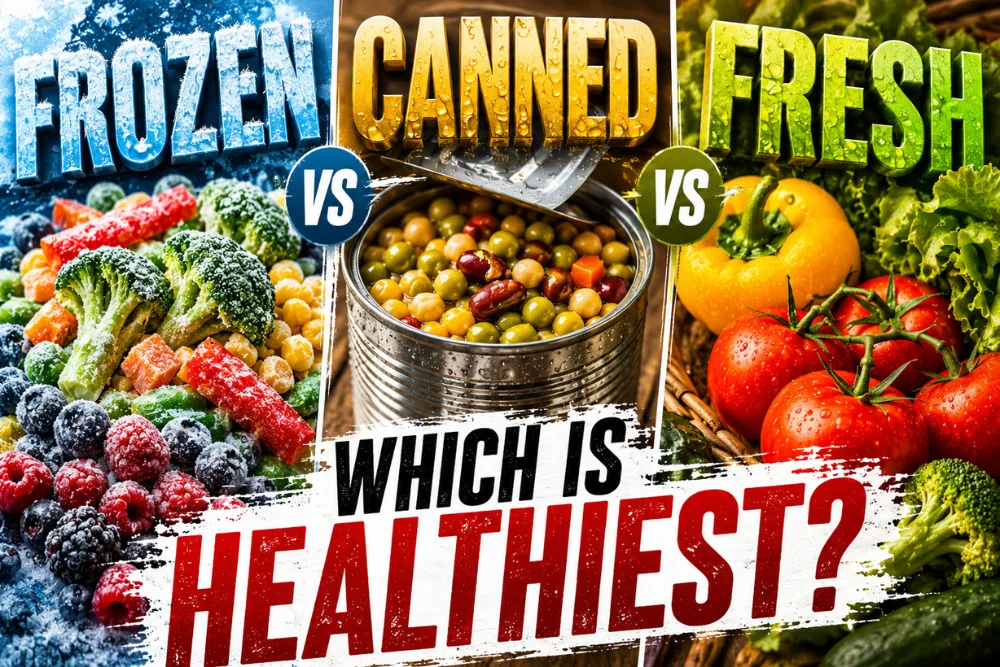
When you’re grocery shopping, it’s easy to think that fresh fruits and vegetables are always the healthiest choice. After all, “fresh” sounds better, right? But here’s the surprising part: frozen and canned produce can be just as nutritious.
In fact, because they’re usually frozen or canned soon after they’re harvested, they may hold on to more nutrients than fresh produce that’s spent several days traveling, sitting on store shelves, or waiting in your fridge.
So, if you’ve ever skipped the frozen aisle thinking it’s a less healthy option, you might want to think again.
Modern freezing and canning techniques are designed to preserve food shortly after harvest, helping lock in vitamins, minerals, fiber, and antioxidants. These preservation methods also make fruits and vegetables more affordable, reduce food waste, and ensure they’re available year-round.
So, should you choose fresh, frozen, or canned?
The answer depends on your nutritional needs, budget, cooking habits, and the specific fruit or vegetable you’re buying. In this guide, we’ll compare all three options, explain how each affects nutrient content, highlight what to look for when shopping, and help you make healthier choices without overspending.
Quick Answer: Are Frozen and Canned Fruits & Vegetables as Healthy as Fresh?
Yes. Frozen and canned fruits and vegetables are generally just as healthy as fresh produce. In many cases, they provide nearly the same amounts of vitamins, minerals, and fiber. Since most frozen and canned produce is processed shortly after harvesting, nutrients are preserved before significant deterioration can occur.
Fresh produce is an excellent choice when consumed soon after harvest. However, fruits and vegetables often spend several days—or even weeks—being transported, stored, and displayed before reaching your plate. During this time, certain nutrients, particularly vitamin C, gradually decline.
Frozen produce is typically harvested at peak ripeness and frozen within hours, helping preserve its nutritional quality. Canned fruits and vegetables also remain nutrient-rich, although some heat-sensitive vitamins may decrease during processing.
Ultimately, the healthiest option is the one you’ll eat consistently. Including a mix of fresh, frozen, and canned fruits and vegetables makes it easier to meet your daily nutrition goals.
Why Fruits and Vegetables Are Essential for Your Health
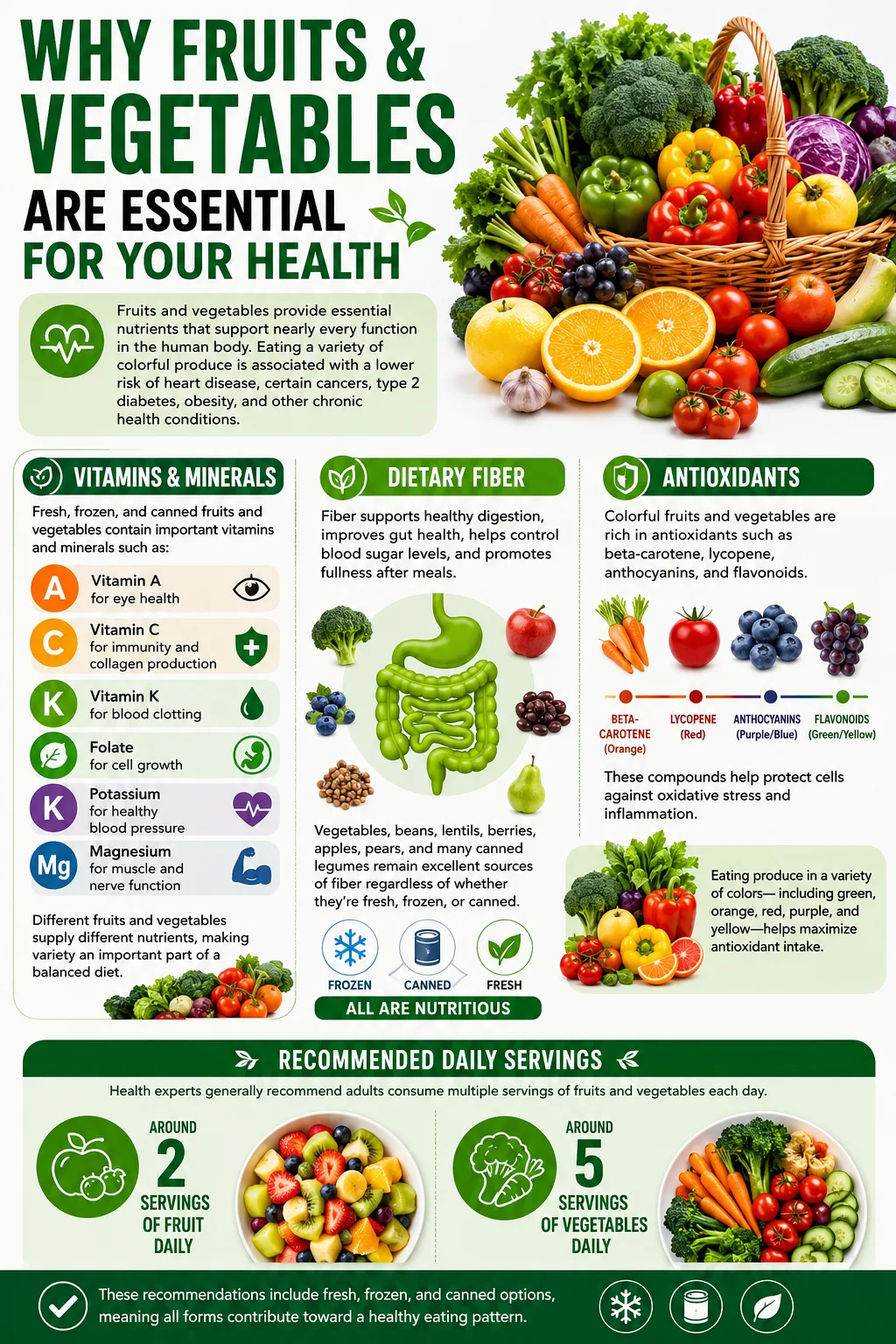
Fruits and vegetables provide essential nutrients that support nearly every function in the human body. Eating a variety of colorful produce is associated with a lower risk of heart disease, certain cancers, type 2 diabetes, obesity, and other chronic health conditions.
Vitamins and Minerals
Fresh, frozen, and canned fruits and vegetables contain important vitamins and minerals such as:
- Vitamin A for eye health
- Vitamin C for immunity and collagen production
- Vitamin K for blood clotting
- Folate for cell growth
- Potassium for healthy blood pressure
- Magnesium for muscle and nerve function
Different fruits and vegetables supply different nutrients, making variety an important part of a balanced diet.
Dietary Fiber
Fiber supports healthy digestion, improves gut health, helps control blood sugar levels, and promotes fullness after meals. Vegetables, beans, lentils, berries, apples, pears, and many canned legumes remain excellent sources of fiber regardless of whether they’re fresh, frozen, or canned.
Antioxidants
Colorful fruits and vegetables are rich in antioxidants such as beta-carotene, lycopene, anthocyanins, and flavonoids. These compounds help protect cells against oxidative stress and inflammation.
Eating produce in a variety of colors—including green, orange, red, purple, and yellow—helps maximize antioxidant intake.
Recommended Daily Servings
Health experts generally recommend adults consume multiple servings of fruits and vegetables each day.
A balanced diet should include:
- Around 2 servings of fruit daily
- Around 5 servings of vegetables daily
These recommendations include fresh, frozen, and canned options, meaning all forms contribute toward a healthy eating pattern.
Fresh vs Frozen vs Canned: Nutritional Comparison
One of the biggest misconceptions is that processing destroys all nutrients. In reality, the nutritional differences between fresh, frozen, and canned produce are often much smaller than people expect.
Some nutrients decrease during freezing or canning, while others remain virtually unchanged. In certain situations, frozen produce can even contain higher levels of specific vitamins than fresh produce that has been stored for several days.
Which Retains the Most Nutrients?
There isn’t one clear winner.
- Fresh produce offers excellent nutrition when eaten soon after harvest.
- Frozen produce retains most nutrients because it’s processed quickly.
- Canned produce preserves many essential nutrients despite some vitamin losses.
The best choice depends more on freshness, storage time, and preparation than on the preservation method itself.
Comparison Table
| Nutrient Factor | Fresh | Frozen | Canned |
|---|---|---|---|
| Fiber | Excellent | Excellent | Excellent |
| Minerals | Excellent | Excellent | Excellent |
| Vitamin C | Highest when freshly harvested | Very high | Slightly reduced |
| Antioxidants | Excellent | Excellent | Good to excellent |
| Shelf Life | Short | Long | Very long |
| Convenience | Moderate | High | Very high |
| Food Waste | Higher | Low | Very low |
Vitamin C Comparison
Vitamin C is sensitive to heat, oxygen, and light.
Fresh produce contains high amounts immediately after harvest, but levels gradually decrease during transportation and storage.
Frozen produce generally preserves vitamin C well because freezing slows nutrient breakdown. Canning may reduce vitamin C because foods are heated during processing, although many canned products still provide meaningful amounts.
Fiber Comparison
Fiber remains remarkably stable regardless of preservation method.
Whether you choose fresh broccoli, frozen peas, canned beans, or frozen berries, you’ll still receive valuable dietary fiber that supports digestion and heart health.
Also read: The Top Five Foods Your Heart Craves, According to a New Study
Mineral Content
Minerals such as calcium, potassium, magnesium, iron, and zinc are highly stable during freezing and canning.
This means frozen spinach, canned beans, and fresh vegetables often contain similar mineral levels.
Antioxidant Levels
Many antioxidants remain well preserved during freezing.
Some canned products, particularly tomatoes, may even have increased availability of certain antioxidants because heat processing makes them easier for the body to absorb.
Calories and Natural Sugars
Fresh, frozen, and canned produce generally contain similar calorie levels.
However, consumers should check labels because some canned fruits are packed in heavy syrup, adding significant amounts of sugar. Likewise, some canned vegetables contain added salt.
Choosing products labeled “No Added Sugar” or “No Added Salt” is the healthiest option.
How Freezing Affects Nutritional Value
Freezing is one of the best food preservation methods available. Most commercially frozen fruits and vegetables are harvested at peak ripeness and frozen within hours. This rapid process slows enzyme activity that would otherwise cause food to spoil and nutrients to degrade.
Unlike fresh produce, which may spend days in transport and on supermarket shelves, frozen produce maintains a consistent nutritional profile until it is thawed.
When Fruits and Vegetables Are Frozen
After harvesting, fruits and vegetables are washed, sorted, and often blanched briefly before being rapidly frozen at extremely low temperatures.
Flash freezing minimizes the formation of large ice crystals, helping preserve texture, color, and nutrients.
Nutrients That Remain Stable
Most nutrients survive freezing remarkably well, including:
- Dietary fiber
- Potassium
- Calcium
- Magnesium
- Iron
- Protein
- Healthy plant compounds
Because freezing halts biological activity, nutrient losses occur much more slowly than in refrigerated fresh produce.
Also read: This FTL1 Protein Foods Trend Is Growing Fast Here Is Why
Nutrients That May Decrease
Some water-soluble vitamins, especially vitamin C and certain B vitamins, may decrease slightly during blanching before freezing.
However, these losses are generally small and are often offset by the reduced nutrient loss during long-term storage.
Why Frozen Produce Can Sometimes Be Healthier Than Fresh
Fresh vegetables aren’t always “fresh” by the time they reach your kitchen.
Also read: Clever Kitchen Hacks that will Change the Way you Cook
Produce transported over long distances may lose nutrients while sitting in warehouses, trucks, grocery stores, and refrigerators.
Frozen produce is often processed immediately after harvest, meaning it may actually contain more of certain nutrients than fresh produce that has been stored for several days.
How Canning Affects Nutritional Value
Canning is another highly effective preservation method that allows fruits and vegetables to remain safe to eat for months—or even years—without refrigeration.
The process involves heating foods to eliminate harmful microorganisms before sealing them in airtight containers.
What Happens During the Canning Process
During canning, foods are heated to destroy bacteria, yeasts, and molds.
This makes canned foods shelf-stable while preserving most nutrients.
Which Nutrients Are Reduced
Heat-sensitive nutrients are the most affected.
These include:
- Vitamin C
- Some B vitamins
Although these vitamins may decline, the overall nutritional value of canned produce remains high.
Nutrients That Remain Intact
Many nutrients are highly stable during canning, including:
- Fiber
- Protein
- Calcium
- Iron
- Potassium
- Magnesium
Canned beans, lentils, tomatoes, peas, and corn continue to provide valuable nutrition.
Why Canned Produce Still Supports a Healthy Diet
Canned fruits and vegetables make healthy eating more accessible.
They’re affordable, convenient, available year-round, and help reduce food waste.
Choosing products with no added salt or sugar ensures you receive maximum nutritional benefits.
Is Fresh Always the Healthiest Choice?
Fresh produce is an excellent choice—but it isn’t automatically healthier.
Its nutritional quality depends heavily on how recently it was harvested and how it has been stored.
The Impact of Storage and Transportation
Many fruits and vegetables travel hundreds or thousands of miles before reaching grocery stores.
During this journey, natural nutrient breakdown continues.
Nutrient Loss Over Time
Vitamin C is especially vulnerable during storage.
Leafy greens, broccoli, and berries gradually lose vitamin C even when refrigerated.
This means frozen produce harvested and frozen immediately may retain more nutrients than fresh produce that’s been sitting for a week.
When Fresh Is the Better Option
Fresh fruits and vegetables are often the best choice when:
- They’re locally grown.
- They’re in season.
- You’ll eat them within a few days.
- You enjoy their texture and flavor.
Ultimately, freshness—not simply the label “fresh”—determines nutritional quality.
Benefits of Frozen Fruits and Vegetables
Frozen produce offers numerous advantages beyond nutrition.
Longer Shelf Life
Frozen fruits and vegetables remain usable for many months without spoiling.
Lower Food Waste
You only use what you need and return the rest to the freezer, reducing unnecessary waste.
Budget-Friendly
Frozen produce is often less expensive than fresh options, especially when certain fruits or vegetables are out of season.
Available Year-Round
Seasonal limitations disappear with frozen foods.
Whether it’s berries in winter or peas in summer, frozen options are consistently available.
Convenient Meal Preparation
Many frozen vegetables come washed, chopped, and ready to cook.
This saves valuable preparation time while encouraging healthier eating habits.
Benefits of Canned Fruits and Vegetables
Canned produce combines convenience with affordability.
Pantry-Friendly Storage
Unlike fresh produce, canned goods require no refrigeration until opened.
They’re perfect for emergency food supplies and busy households.
Affordable Nutrition
Canned fruits and vegetables often cost less than fresh produce while offering similar nutritional value.
Great Source of Fiber
Beans, chickpeas, lentils, and vegetables remain rich in dietary fiber after canning.
Ideal for Quick Meals
Canned foods are ready to use in:
- Soups
- Salads
- Pasta
- Rice dishes
- Curries
- Stews
They help prepare nutritious meals in minutes.
Things to Watch Out For
Not all frozen and canned products are created equal.
Reading nutrition labels helps you make healthier choices.
Added Sodium in Canned Vegetables
Some canned vegetables contain significant amounts of added salt.
Look for labels that say:
- No Added Salt
- Low Sodium
- Reduced Sodium
Rinsing canned vegetables under running water can also reduce sodium content.
Added Sugar in Canned Fruit
Many canned fruits are packed in syrup.
Choose fruit packed in:
- Water
- Natural juice
Avoid heavy syrup whenever possible.
Syrup vs Juice
Fruit packed in juice contains fewer added sugars than fruit packed in syrup while retaining the same natural sweetness.
BPA-Free Cans
Many manufacturers now offer BPA-free packaging.
If available, choosing BPA-free cans may provide additional peace of mind.
Reading Nutrition Labels
Always check:
- Sodium
- Added sugar
- Ingredient list
- Serving size
The fewer unnecessary ingredients, the better.
Best Frozen Fruits to Buy
Some fruits freeze exceptionally well while maintaining excellent texture and nutrition.
Berries
Perfect for smoothies, yogurt, oatmeal, and desserts.
Mango
Retains sweetness and works well in smoothies and fruit bowls.
Peaches
Ideal for baking, desserts, and breakfast recipes.
Mixed Fruit
Offers convenience and variety while reducing food waste.
Best Frozen Vegetables to Buy
Frozen vegetables are among the healthiest convenience foods available.
Excellent choices include:
- Broccoli
- Peas
- Spinach
- Mixed vegetables
- Edamame
These vegetables cook quickly and retain most of their nutrients.
Best Canned Fruits to Buy
Look for fruits packed in juice rather than syrup.
Good options include:
- Peaches
- Pears
- Pineapple
- Mixed fruit with no added sugar
Best Canned Vegetables and Legumes
Some of the healthiest pantry staples include:
- Black beans
- Kidney beans
- Chickpeas
- Lentils
- Corn
- Tomatoes
These foods provide fiber, protein, vitamins, and minerals while supporting quick, nutritious meals.
Frozen vs Canned vs Fresh: Cost Comparison
| Feature | Fresh | Frozen | Canned |
|---|---|---|---|
| Initial Cost | Moderate to High | Moderate | Usually Lowest |
| Shelf Life | Days | Months | 1–5 Years |
| Food Waste | Highest | Low | Lowest |
| Preparation Time | Moderate | Low | Very Low |
| Seasonal Availability | Limited | Year-Round | Year-Round |
| Best For | Flavor & texture | Everyday cooking | Pantry storage |
For families on a budget, combining all three options often provides the best balance of nutrition, convenience, and affordability.
Which Option Is Best for Different Goals?
Weight Loss
Fresh, frozen, and canned vegetables are all excellent choices because they’re low in calories and high in fiber.
Muscle Building
Frozen vegetables and canned legumes pair well with lean proteins to create balanced, high-protein meals.
Diabetes-Friendly Diets
Choose products without added sugar and focus on fiber-rich vegetables, beans, and legumes.
Heart Health
Low-sodium vegetables, leafy greens, berries, and legumes support cardiovascular health.
Busy Lifestyles
Frozen vegetables and canned beans make healthy cooking fast and convenient.
Budget-Conscious Shoppers
Frozen and canned produce often deliver the best nutritional value per dollar while minimizing food waste.
Tips for Choosing the Healthiest Frozen and Canned Produce
- Choose products labeled No Added Sugar.
- Select No Added Salt whenever possible.
- Rinse canned vegetables and beans before eating.
- Avoid fruits packed in heavy syrup.
- Read ingredient lists and choose products with minimal additives.
Easy Ways to Add More Fruits and Vegetables to Your Diet
Try incorporating produce into everyday meals:
- Blend frozen berries into smoothies.
- Add frozen spinach to omelets.
- Stir frozen vegetables into pasta.
- Toss canned beans into salads.
- Add frozen peas to rice dishes.
- Mix canned tomatoes into soups and curries.
- Top yogurt with frozen fruit.
- Prepare overnight oats with berries and sliced fruit.
What About Dried Fruits and Vegetables?
You might also be wondering about dried fruits and vegetables. Are they a healthy choice too?
When it comes to dried beans, chickpeas, and lentils, the answer is yes. They’re packed with fiber and protein, cost less than canned versions, and can last for months in your pantry. The only downside is that they usually take a little more time to prepare. Some need to be soaked overnight before cooking, while others can go straight into the pot—just check the instructions on the package.
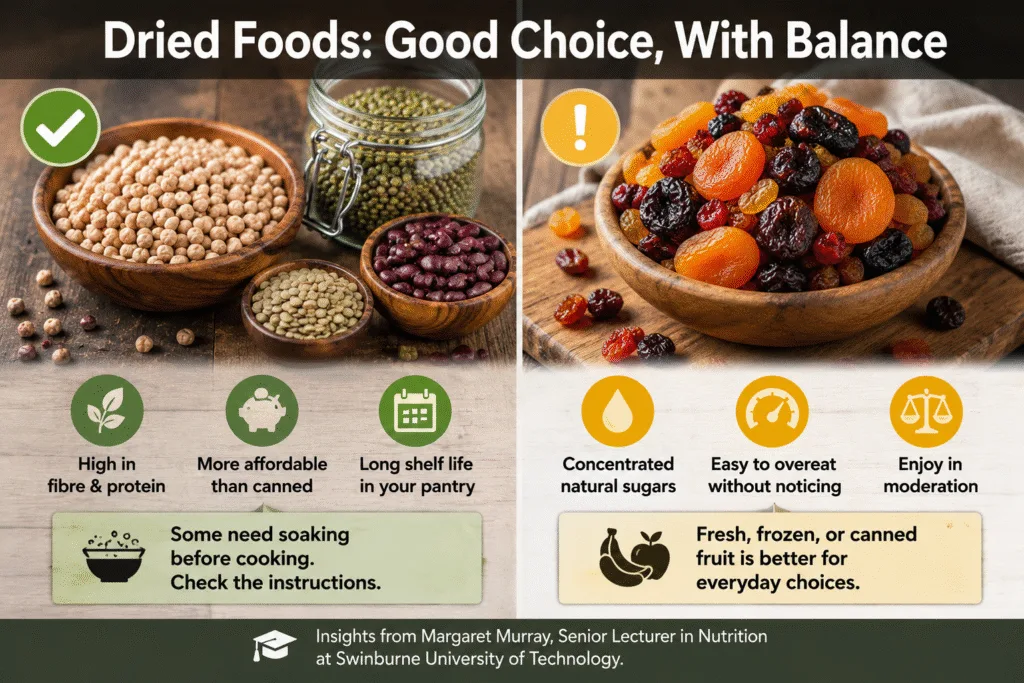
Dried fruit is a bit different. While it still contains vitamins, minerals, and fiber, the drying process removes most of the water, making the natural sugars much more concentrated. That means it’s easier to eat a lot of dried fruit without realizing how much sugar you’re consuming.
There’s no need to avoid dried fruit completely, though. It can still be a healthy snack when enjoyed in moderation. For everyday fruit intake, however, fresh, frozen, or canned fruit packed in natural juice or water is generally the better choice.
This information is based on insights from Margaret Murray, Senior Lecturer in Nutrition at Swinburne University of Technology.
Common Myths About Frozen and Canned Produce
Myth: Frozen vegetables have no nutrients.
Fact: Frozen vegetables retain most of their vitamins, minerals, and fiber.
Myth: Canned fruit is unhealthy.
Fact: Fruit packed in water or juice can be a healthy addition to your diet.
Myth: Fresh is always superior.
Fact: Fresh, frozen, and canned produce all have nutritional benefits.
Myth: Frozen foods contain preservatives.
Fact: Most frozen fruits and vegetables contain no preservatives because freezing itself preserves the food.
Frequently Asked Questions
Are frozen vegetables healthier than fresh?
Not necessarily. Both are nutritious, and frozen vegetables may retain more nutrients if fresh produce has been stored for several days.
Is canned fruit healthy every day?
Yes, especially when it’s packed in water or natural juice without added sugar.
Do frozen fruits lose vitamins?
Some minor vitamin loss may occur during processing, but frozen fruits remain highly nutritious.
Should canned vegetables be rinsed?
Yes. Rinsing can reduce excess sodium.
Which is better for weight loss?
Fresh, frozen, and canned vegetables can all support weight loss when prepared without excessive salt, sugar, or high-calorie sauces.
Are frozen fruits good for smoothies?
Absolutely. Frozen fruits provide excellent flavor, texture, and nutrition.
How long do frozen vegetables last?
Most remain at their best for 8–12 months when stored properly.
Is canned food processed?
Yes, but processing does not automatically make food unhealthy. Many canned fruits and vegetables retain significant nutritional value.
Can frozen produce replace fresh completely?
Yes. Frozen produce can easily be part of a healthy, balanced diet, though eating a variety of fresh, frozen, and canned options offers the greatest flexibility.
Conclusion
There is no single “best” choice. Fresh, frozen, and canned fruits and vegetables all contribute to a healthy diet and help you meet your daily nutrition needs.
If fresh produce is available, affordable, and will be eaten quickly, it’s an excellent option. Frozen produce is ideal for preserving nutrients, reducing waste, and simplifying meal preparation. Canned fruits, vegetables, and legumes provide affordable, shelf-stable nutrition that makes healthy eating easier throughout the year.
The most important takeaway is simple: eat more fruits and vegetables in whatever form fits your lifestyle. A combination of fresh, frozen, and canned produce gives you the greatest variety, convenience, and nutritional value while making it easier to build healthy eating habits that last.