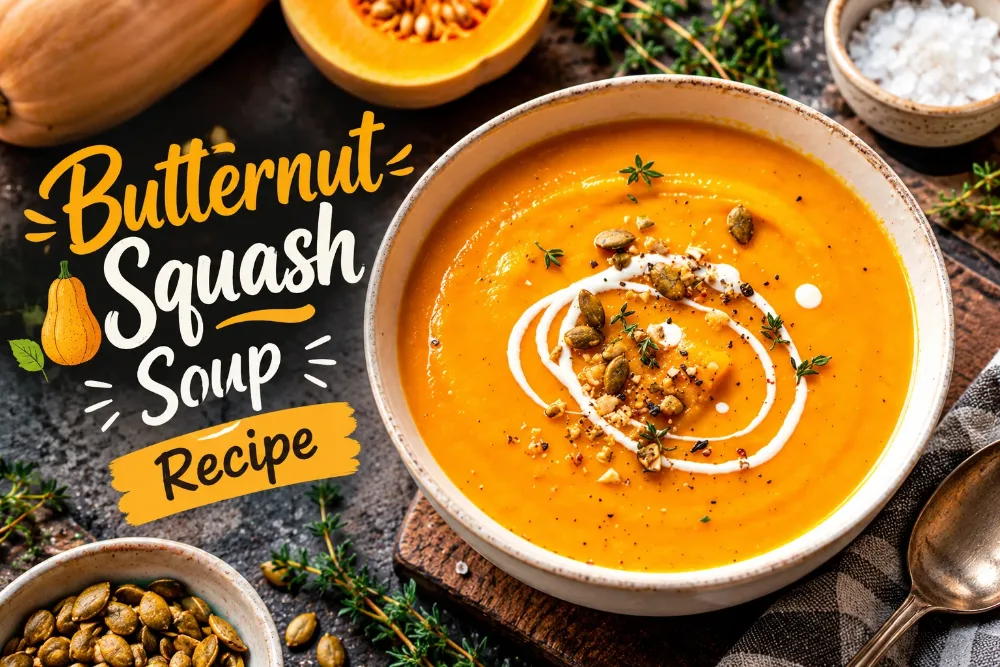
A good butternut squash soup comes together in one pot. You soften onions, carrots and garlic in butter, simmer chopped squash with broth, fresh sage and smoked paprika until the squash starts to fall apart, then blend until smooth. It takes about 15 minutes of prep and 30 to 40 minutes of cooking, and it makes roughly 8 cups, enough for 4 to 6 people.
That is the whole method. What keeps people coming back to this soup is how much room it leaves for improvisation. Below you will find the key ingredients, the steps, a handful of variations, and how to store it properly.
Why This Soup Belongs in Your Autumn Rotation
Autumn is the start of soup season, and few soups say “fall” as clearly as this one. The colour is a deep, bright orange, the flavour is warm, and the texture turns naturally creamy once blended, with no heavy cream required.
The recipe’s author admits she rarely makes it plain. She usually stirs in something extra, such as curry paste, miso paste or cheddar. That is the real appeal: a simple base that never gets boring. For a blended vegetable soup, it feels surprisingly special.
Have you ever noticed how some recipes feel like a finished dish while others feel like a starting point? This one is firmly the second kind.
What Goes Into the Pot
The ingredient list is short, but each item does real work.
Butternut Squash
The squash is the star. When you shop, look for one with a longer neck and a smaller bulb. The neck is solid flesh, while the bulb holds the seeds and pulp, so a long neck gives you more usable squash and less to scoop out. If cutting a hard squash makes you nervous, this guide on how to cut and peel a butternut squash is worth a look.
Aromatics
Diced onions, carrots and crushed garlic build the savoury base. Cooking them in butter until softened and lightly browned in spots gives the finished soup depth that you cannot get by simply boiling everything together.
Broth
Low sodium vegetable broth keeps the soup vegetarian. Chicken broth works too if that suits your table better. Choosing a low sodium broth also leaves you in control of the seasoning at the end.
Smoked Paprika and Fresh Sage
Smoked paprika adds a layer of smokiness, and a little goes a long way. Fresh sage goes into the pot with the squash and broth, and more finely chopped herbs can finish the bowl.
How to Make Butternut Squash Soup, Step by Step
You will need a medium Dutch oven and a blender of some kind.
Start With the Aromatics
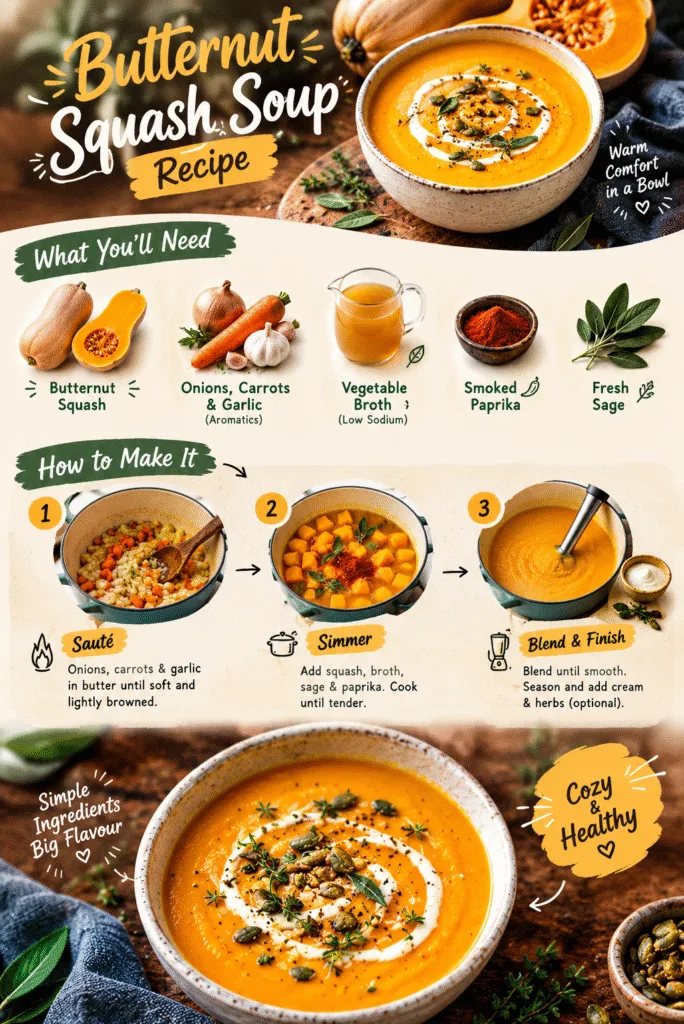
Melt the butter in the Dutch oven and sauté the diced onions, carrots and garlic. You are aiming for soft vegetables with a few lightly browned spots. Those browned edges are where much of the flavour comes from, so do not rush this stage.
Let the Squash Simmer Until It Gives Up
Stir in the chopped butternut squash, vegetable broth, fresh sage and smoked paprika. Bring everything to a boil, then lower the heat to keep a gentle simmer. Partially cover the pot and cook until the squash begins to fall apart. That is your signal that it will blend smoothly.
Blend, Season and Serve
An immersion blender lets you blend right in the pot until the soup is smooth. If you prefer, a stand blender works too, though you should blend in batches. Season with salt and pepper to taste. Finish with a drizzle of cream if you like, plus a scattering of finely chopped herbs.
A Tip That Can Save You Time: Skip the Peeling
Peeling and chopping raw butternut squash is the part many home cooks dread. The recipe’s testing notes point to an easier route. Microwaving a whole squash produced the favourite batch of soup, with bright squash flavour and a remarkably creamy texture. Roasting squash halves came a close second, adding a little caramelized richness while keeping the flesh moist.
Cooking the squash whole or in halves means you avoid peeling and much of the difficult prep that comes with cutting up a raw squash. If you go this route, you would be working from cooked squash rather than raw chunks, so the simmering stage would be shorter in practice. Use the squash’s softness as your guide.
Ways to Change the Flavour
This is where the soup becomes yours. The recipe suggests plenty of directions.
Add Warmth or Heat
Stir a tablespoon or two of Thai curry paste in with the onions and carrots for a curried version. For heat, add Calabrian chili paste or chipotle peppers in adobo sauce along with the broth.
A tiny pinch of warming spices also works, such as cinnamon and nutmeg, or blends like smoky bahārāt, ras el hanout or pumpkin spice. The recipe notes this is especially good with crumbled feta on top.
Make It Richer and Sweeter
One of the author’s favourite variations is a few teaspoons of miso paste, a drizzle of maple syrup and a handful of shredded cheddar. If you want something closer to a well known café version, add some apple cider and a small nub of cream cheese at the end.
Change the Vegetables
Sauté a diced apple or a fennel bulb with the onions and carrots. You can also swap some of the butternut for honeynut squash or another winter squash variety.
Also read:
Rethink the Garnish
Garnishes can change the whole feel of a bowl. Swap woody herbs for tender ones like parsley or cilantro, add a squeeze of lime juice, or top the soup with toasted pepitas.
Which direction would you take first: smoky and spicy, or sweet and cheesy?
Making Ahead, Storing and Freezing
The soup keeps well, which makes it a good candidate for batch cooking. You can make it a few days before you plan to serve it. Just hold back any coconut milk or cream drizzle until you reheat.
Leftovers can be refrigerated in an airtight container for up to 4 days, or frozen for up to 3 months. The author likes to make a double batch and freeze half. Once thawed, you can add a different flavouring from the list above and end up with what feels like a brand new soup.
What Is in a Bowl: Nutrition and Dietary Notes
Based on 6 servings, each serving contains:
- Calories: 216
- Fat: 11.6 g (14.9% daily value), of which saturated fat is 6.5 g (27.8%)
- Carbs: 24.8 g (8.5%)
- Fiber: 3.9 g (10.3%)
- Sugars: 8.1 g
- Protein: 6.4 g (5.4%)
- Sodium: 409.6 mg (27.3%)
The recipe is listed as free of pork, peanuts, eggs, gluten, sulphites, soy, fish, tree nuts, red meat, alcohol, shellfish and wheat. If you add extras such as cheese, cream cheese, apple cider or a particular broth, check those ingredients against your own dietary needs.
Also read:
Questions People Ask About Butternut Squash Soup
Is butternut squash soup vegetarian?
It can be. Using low sodium vegetable broth keeps it vegetarian, though the recipe also says chicken broth is fine if you are not concerned about that. The soup is cooked with butter, so it is vegetarian but not vegan as written.
Can I make it without peeling the squash?
Yes. Microwaving a whole squash or roasting halves removes most of the peeling and cutting work. The testing notes found the microwaved squash gave the best soup, and roasted halves came a close second.
Should I use an immersion blender or a stand blender?
Either works. An immersion blender is convenient because you blend directly in the pot. A stand blender also gives a smooth result, but you should work in batches.
How do I stop the soup from tasting plain?
Treat the base as a blank slate. Curry paste, miso with maple syrup and cheddar, chipotle in adobo, or warming spice blends all change the character completely. A garnish like toasted pepitas, feta or a squeeze of lime can also make a big difference.
When should I add cream or coconut milk?
Add it when you serve. If you are making the soup ahead, leave the cream or coconut milk out until you reheat it.
How long does leftover soup last?
Up to 4 days in the fridge in an airtight container, or up to 3 months in the freezer.
Can I use a different squash?
You can swap some of the butternut for honeynut squash or another winter squash variety. Keeping some butternut in the mix preserves the soup’s familiar flavour and colour.
Your Next Pot of Soup
Make the plain version once so you know the base, then start experimenting. Freeze half of a double batch and use it as a testing ground for a new flavour on a later night. By the time the weather turns properly cold, you will probably have a version that feels like your own.
Also read: