
Let the chicken cool until it is comfortable to touch, take the meat off the bone or break it into pieces, and refrigerate it in shallow airtight containers within 2 hours of buying it.
Eat it within 3 to 4 days, or freeze it for up to 3 months. The common habit of dropping the whole bird, packaging and all, straight into the fridge is the mistake food safety experts want you to avoid.
That advice might feel fussy when you are tired and dinner is already on the table. But it takes only a few minutes, and it protects both the chicken and everything sitting next to it in your refrigerator.
Why a Hot Chicken Straight from the Bag Causes Trouble
A rotisserie chicken holds a surprising amount of heat. Chef and dietitian Leah Sarris explains that a whole bird is large and dense, so when it goes straight into the fridge, that heat warms the surrounding air and can raise the temperature of foods around it. Milk and eggs are two examples she points to.
This matters because refrigerated food needs to stay at 40°F or below to slow bacterial growth. The chicken itself is at risk too. The meat near the bone cools slowly and can linger between 40°F and 140°F, the range commonly called the temperature danger zone, much longer than most people expect.
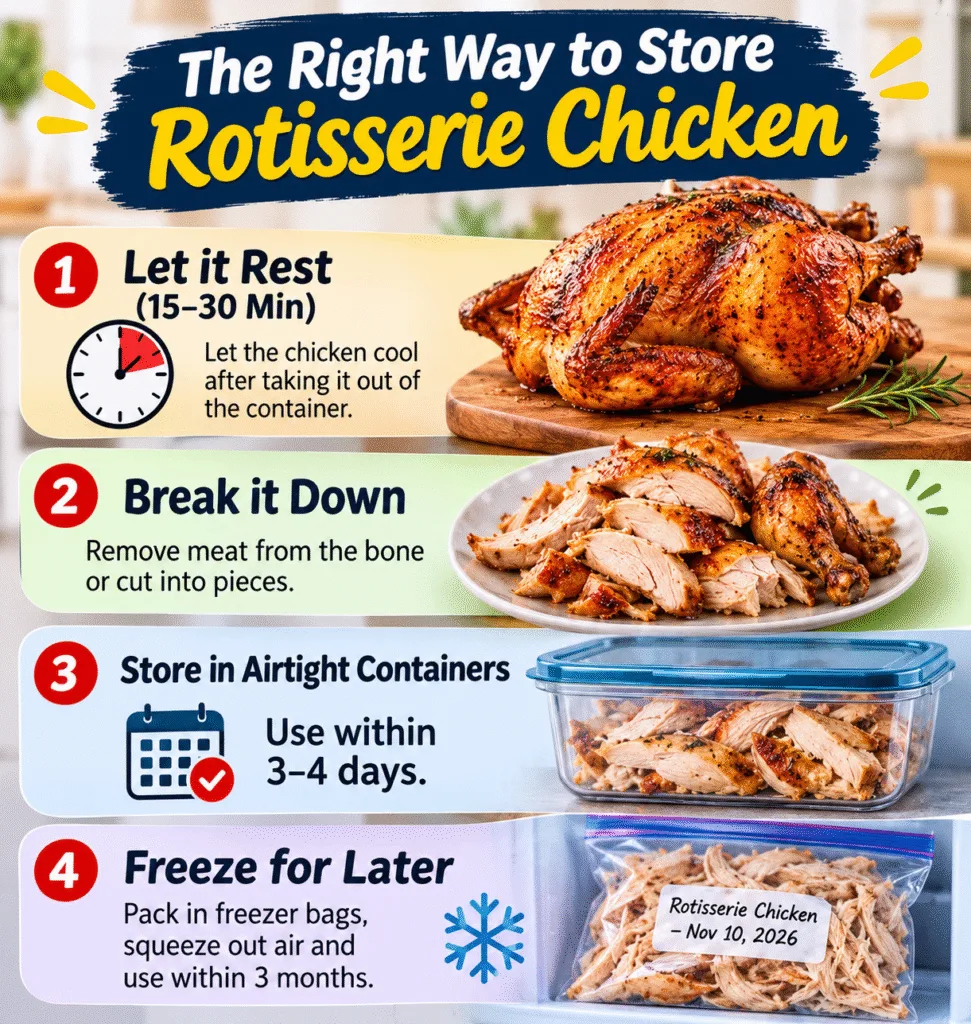
Guide to Show the Right Way to Store Rotisserie Chicken
The bird may also have had a bumpy journey before it reached your kitchen. It could have moved from the store warmer to your basket to your car, with temperatures shifting along the way. She suggests picking up the chicken at the end of your shopping trip and heading straight home.
The Right Way to Store Rotisserie Chicken
Step one: let it rest, but not for long
Take the chicken out of its container and let it sit until it is comfortable to handle. Sarris puts that at about 15 to 20 minutes. Other storage guidance suggests at least 30 minutes of cooling at room temperature. Either way, the chicken should be in the refrigerator within 2 hours of purchase.
Step two: break it down
Decide how you plan to use the chicken. If you want meat for salads or tacos, pull it off the bone. If you would rather have a proper meal later, cut the bird into pieces and leave the bones in. There is a small bonus here: warm meat comes off the bird more easily than cold or scalding meat.
Step three:
She recommends storing the sections in shallow, airtight containers and using them within three to four days. A shallow container matters because smaller, thinner portions cool faster than one deep, packed mound of meat.
One home cook on the r/EatCheapAndHealthy forum shared a similar experience. Their theory was that stacking hot meat in a deep sealed container traps heat, while a thin layer spread on a wide dish lets heat escape. They reported a noticeable difference in taste. This is one person’s observation rather than expert advice, but it fits the cooling logic above.
Step four: freeze what you will not finish
Shredded chicken freezes well. Pull the meat off the bone, cut it into small or meal sized portions, and pack it into freezer safe bags with as much air squeezed out as possible. You can also wrap portions in plastic wrap and then aluminum foil. Label everything with the date and use it within about 3 months.
Why the Store Packaging Has to Go
It is built to keep chicken hot, not to store it
Plastic bags and carrier cases are designed to hold heat during the trip home. Sarris points out that sealed up in the fridge, the chicken steams in its own heat. The crisp skin turns soggy and rubbery, and the meat can become dense and stringy. Plastic grocery bags and vented containers also trap steam and condensation, creating a warm, humid environment where bacteria multiply quickly.
Heat and plastic are a questionable mix
Registered dietitian Jessica Brantley-Lopez raises another point. Some studies suggest heat makes plastic more likely to break down into food, and a rotisserie chicken usually goes into its container extremely hot. Her advice is simple: once you get home, take the chicken out of the plastic.
How to Tell When Rotisserie Chicken Has Gone Bad
Even with perfect storage, leftovers do not last forever. Throw the chicken away if you notice any of these:
- A sour or rancid smell.
- A slimy or sticky texture.
- Green, gray, or iridescent discoloration.
If you are unsure how long something has been in the fridge, EatingWell’s guide on how to tell if leftovers have gone bad is a helpful companion.
Why Rotisserie Chicken Is Worth the Effort
Have you ever counted how many rotisserie chickens end up in your shopping cart each year? Americans buy around 950 million of them annually, which works out to almost three chickens per person. The appeal is easy to understand.
A rotisserie chicken is a whole chicken roasted on a spit over direct heat, known for crisp skin and juicy meat. Because it is roasted rather than fried, it is often seen as a higher protein, lighter option than fried chicken.
A 3 ounce (85 gram) portion of skinless breast contains 24 grams of protein and 3 grams of fat, with less than 1 gram of that being saturated.
It also provides niacin, selenium, phosphorus, and several B vitamins. Skin on portions and dark meat such as thighs and drumsticks carry more calories and saturated fat.
There is one thing to watch. Supermarket birds are often brined or seasoned with salt and phosphates to keep the meat moist. Removing the skin cuts down significantly on both sodium and seasoning additives.
Ways to Turn Leftover Chicken into Real Meals
Once the chicken is stored properly, it becomes a head start on several quick dinners:
Pair it with a bagged salad. Sarris says this combination brings a meal together in about five minutes.
Use it as a soup starter. Chicken noodle, chicken chili, and chicken and rice soup all come together faster with precooked meat.
Build a grain bowl. Brantley-Lopez calls it the perfect vehicle for rotisserie chicken.
Stuff it into tacos. Sarris suggests a citrus slaw made from pre cut slaw mix, or a simple corn salsa.
Simmer the carcass into broth. Both dietitians say homemade stock from rotisserie bones is easy.
A Note on Reheated Flavor
Some people find that cooked chicken tastes slightly off after being chilled and reheated. One forum contributor suggested two workarounds: use the chicken in cold dishes such as chicken salad, or store it in liquid and use it in soups and other wet dishes. That is a home cook’s tip, not tested guidance, but it is easy to try. Storing the meat in smaller portions, as Sarris recommends, also helps because the meat is less likely to become overdone.
More Sources
Information in this article comes from the following references:
- EatingWell: The Mistake You’re Making When You Bring Your Rotisserie Chicken Home
- Healthline: Is Rotisserie Chicken Healthy?
- EatingWell: How to Limit Microplastics in Your Food
You may also love:
Frequently Asked Questions
Can I put a warm rotisserie chicken in the fridge to save time?
It is better not to put the whole bird in as it is. Its size and density mean it holds heat, which can warm nearby foods above 40°F and keep the meat near the bone in the danger zone for longer. Letting it cool briefly and breaking it into pieces is the safer route.
How long can I leave a rotisserie chicken out before refrigerating?
Refrigerate it within 2 hours of purchase. A short rest of 15 to 30 minutes at room temperature to let it cool is fine, but it should not sit out much longer than that.
How long does leftover rotisserie chicken last in the fridge?
Three to four days at most, stored in airtight containers.
Can I keep the chicken in the plastic container it came in?
It is not recommended. Those containers trap steam and moisture, which encourages bacterial growth and makes the skin soggy. Heat may also encourage plastic to break down into food, so moving the chicken into proper containers is wiser.
Does shredded chicken freeze well?
Yes. Shredded or portioned chicken freezes well for up to 3 months when packed in freezer safe bags or containers, or wrapped in plastic wrap and foil. Squeeze out excess air and write the date on the package.
Should I eat the skin?
It is a matter of taste and goals. The skin adds crispness but also more calories, saturated fat, and sodium. Removing it significantly reduces both sodium and seasoning additives.
What should I do with the leftover bones?
Keep them. Both dietitians quoted here recommend using the carcass to make homemade chicken broth.
About The Author
